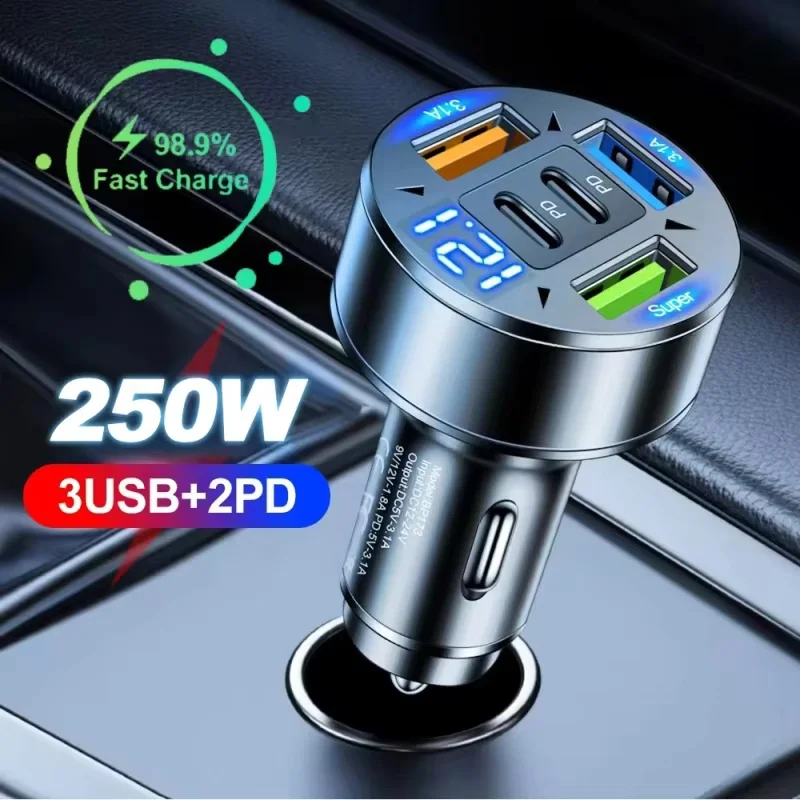
From the 12V socket to USB-C
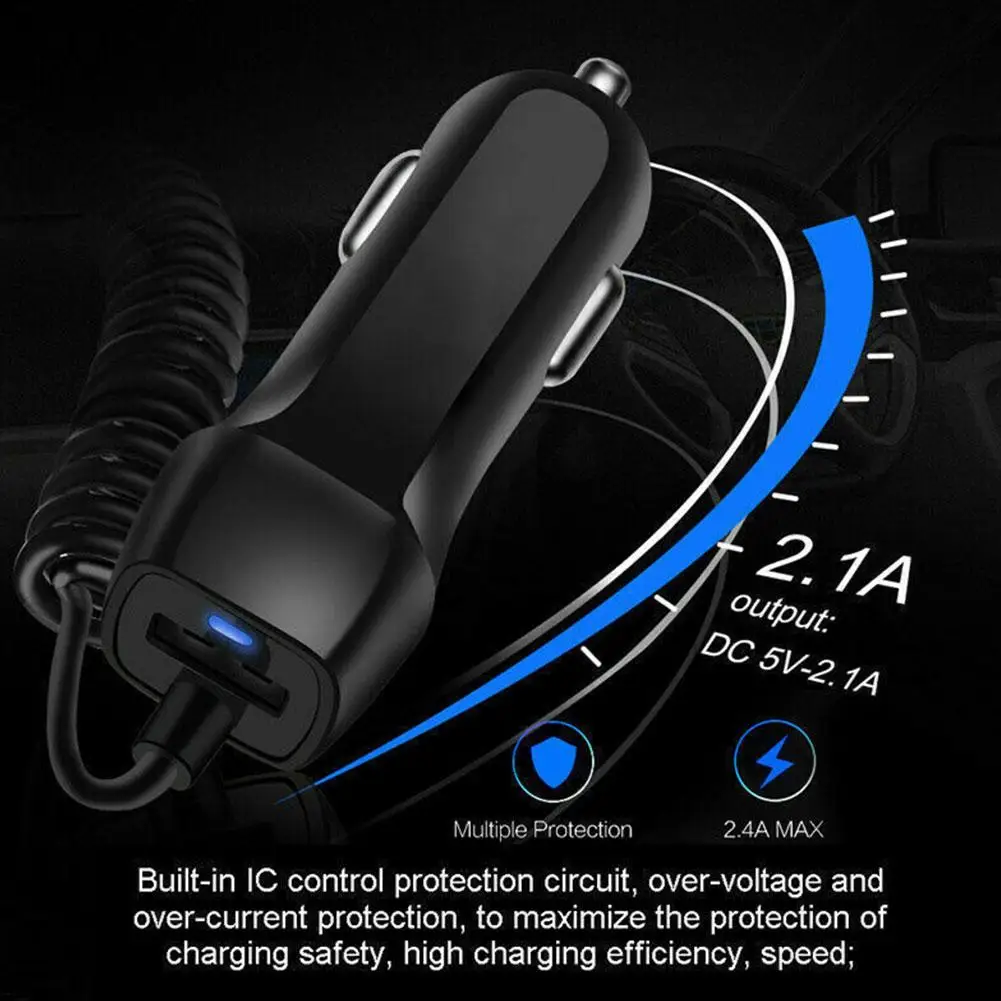
The round socket in the dashboard or console, once the cigarette lighter, supplies the car's 12V. A car charger plugs into it and turns that into the steady USB power a phone, tablet or laptop expects. Newer phones and tablets charge through USB-C, and a charger with USB-C ports lets them charge faster from a single cable. Many chargers here also keep a USB-A port or two for older cables and devices.
What you will find here
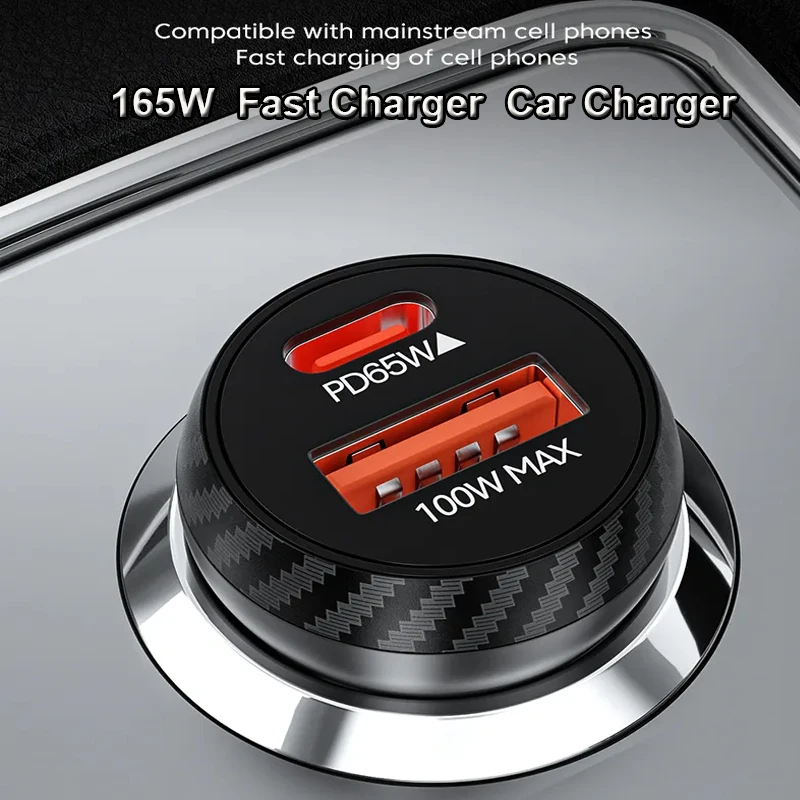
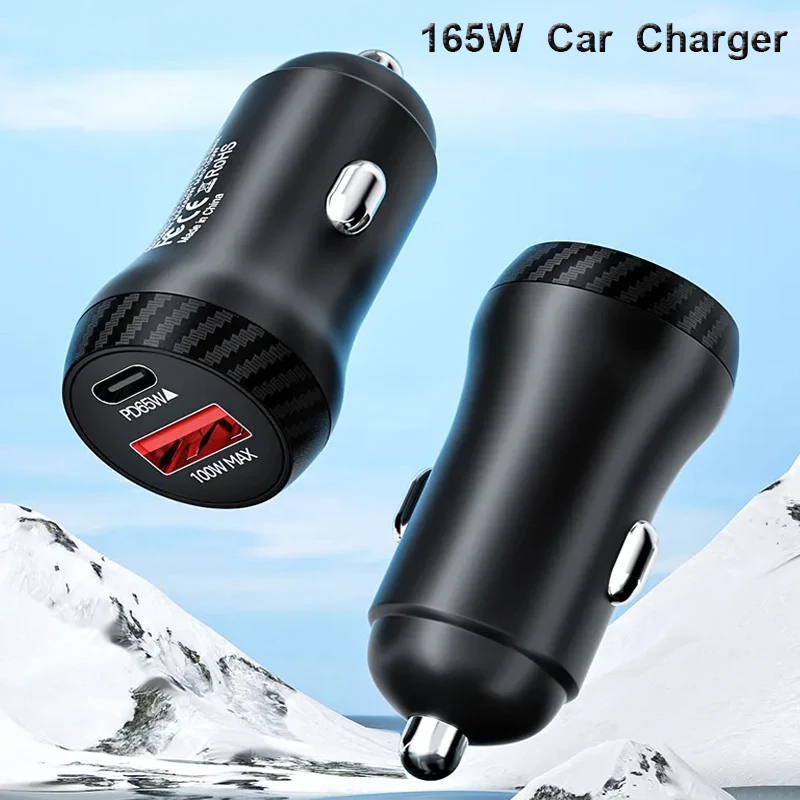
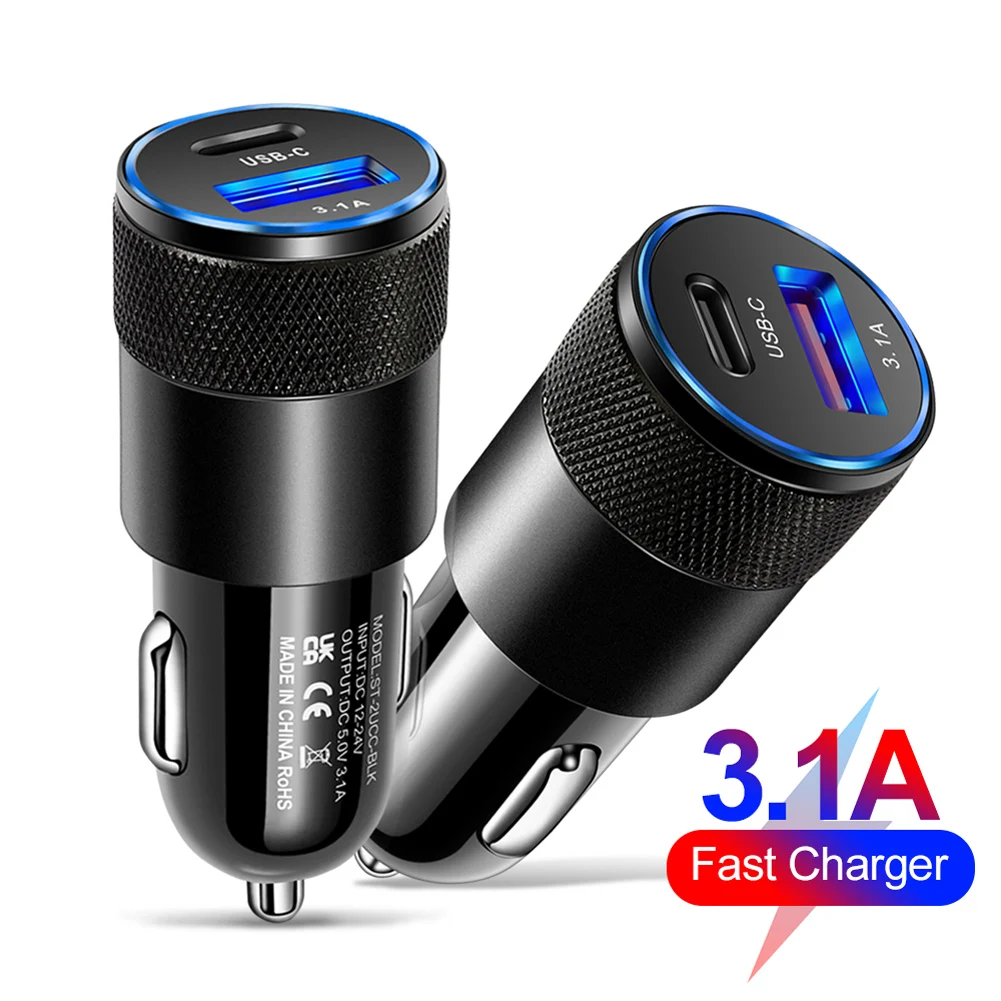
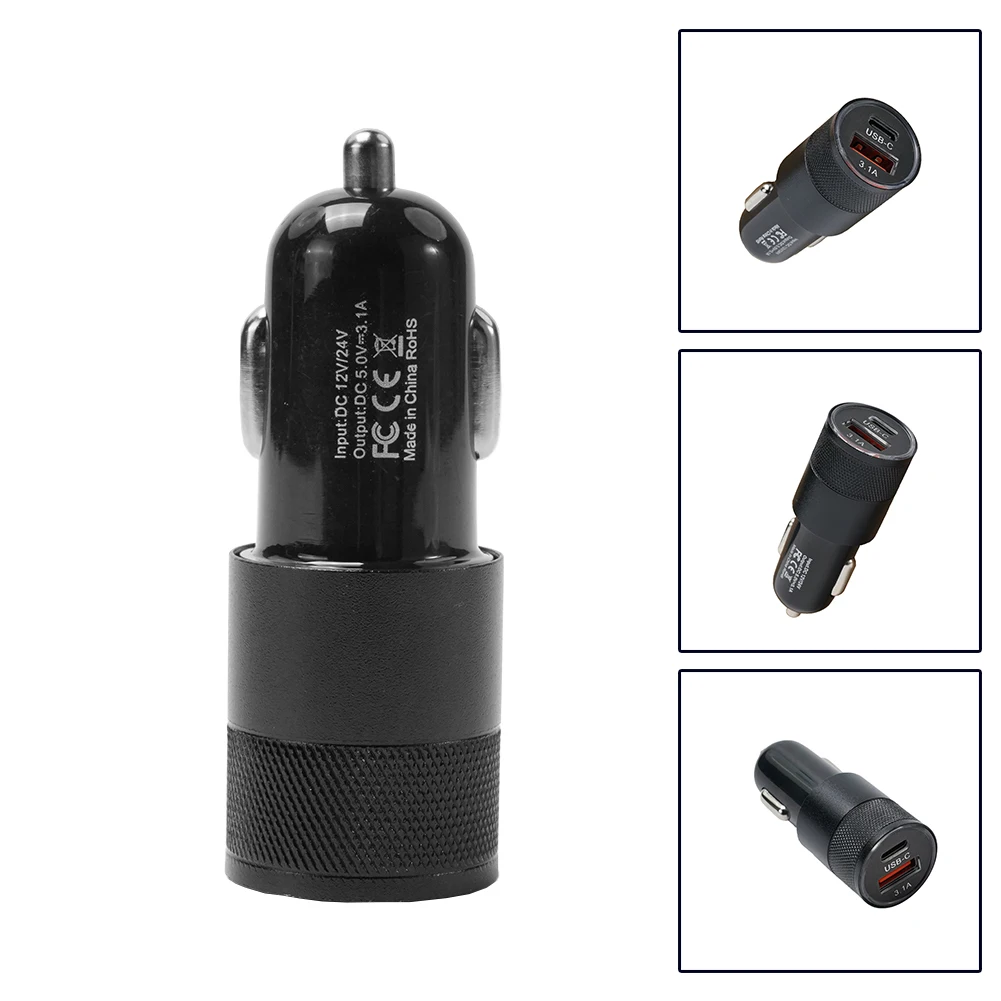
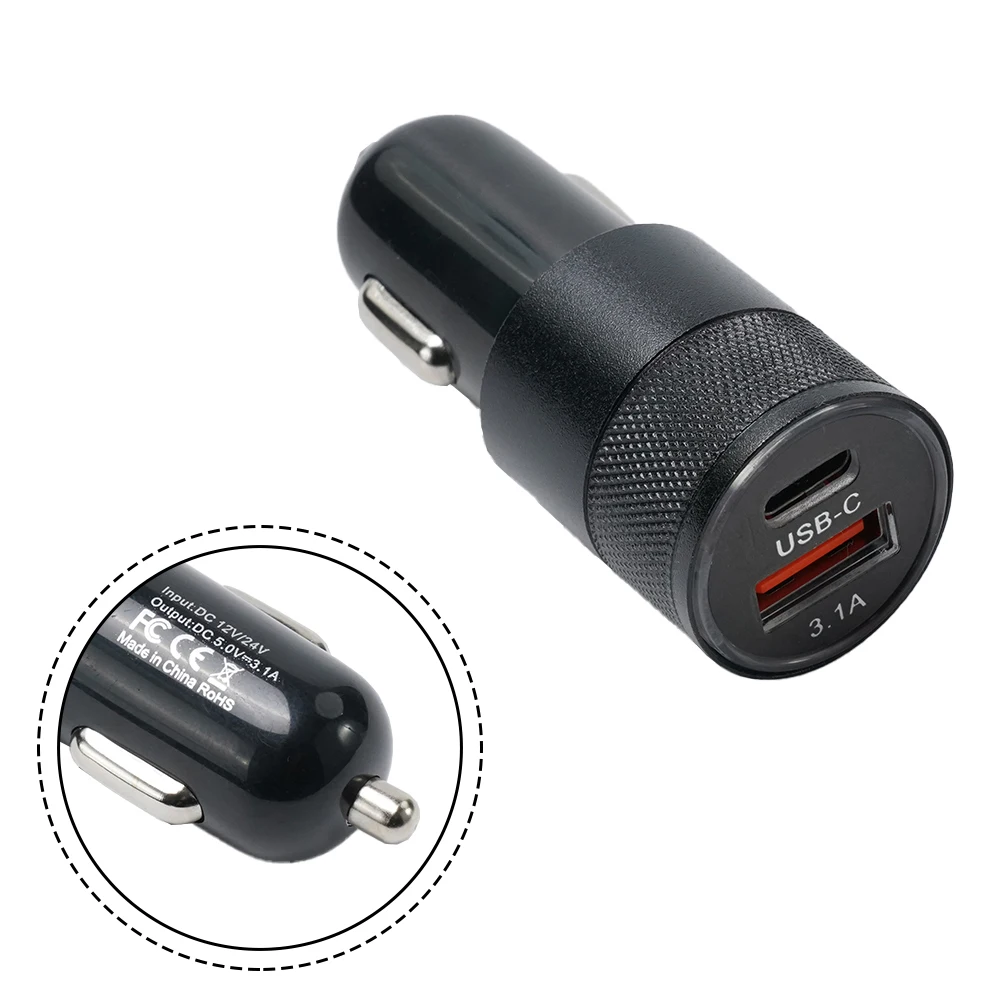
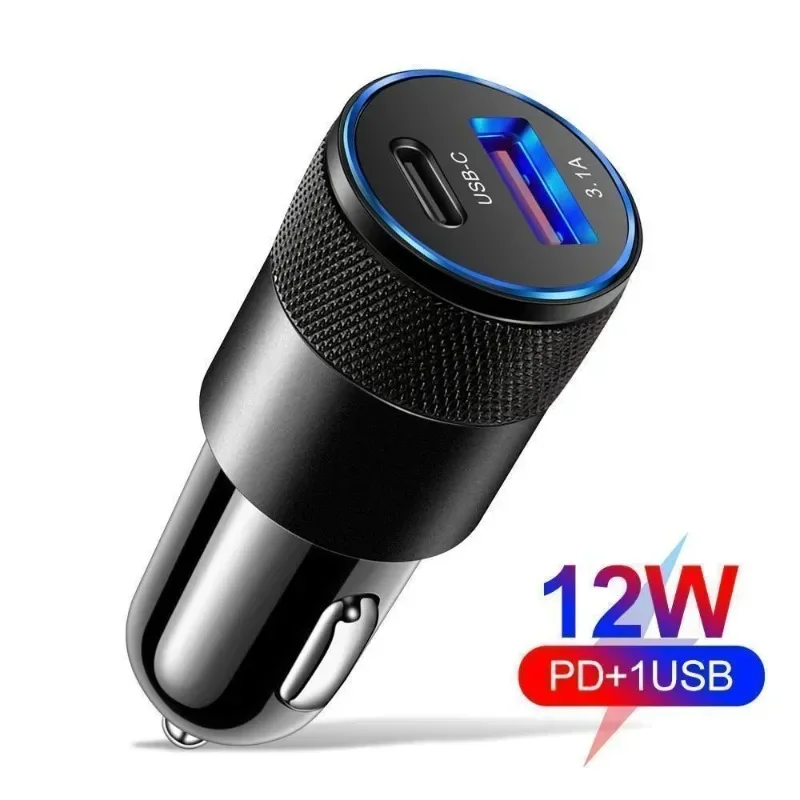
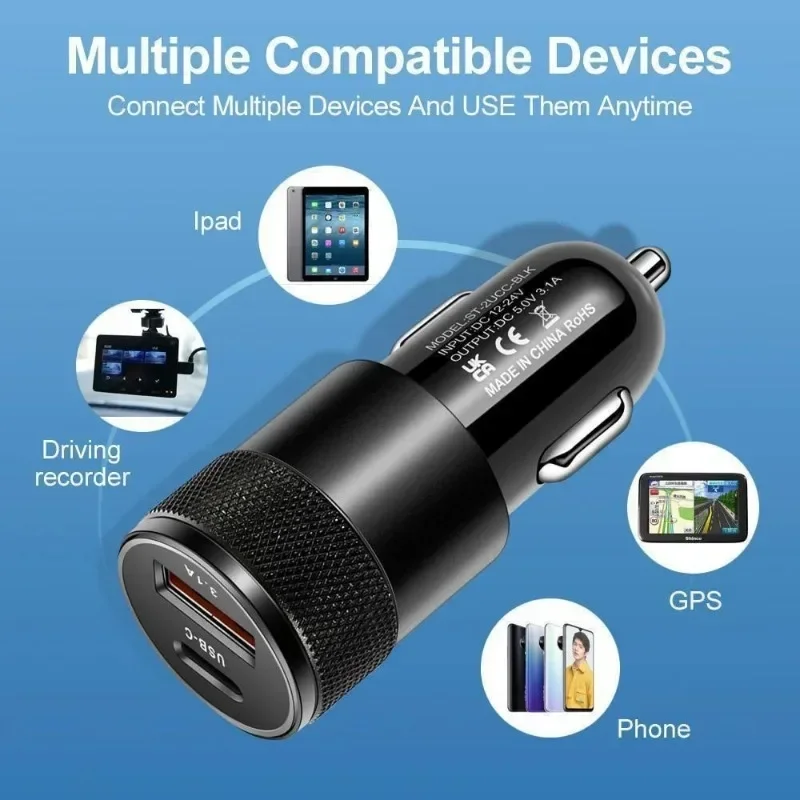
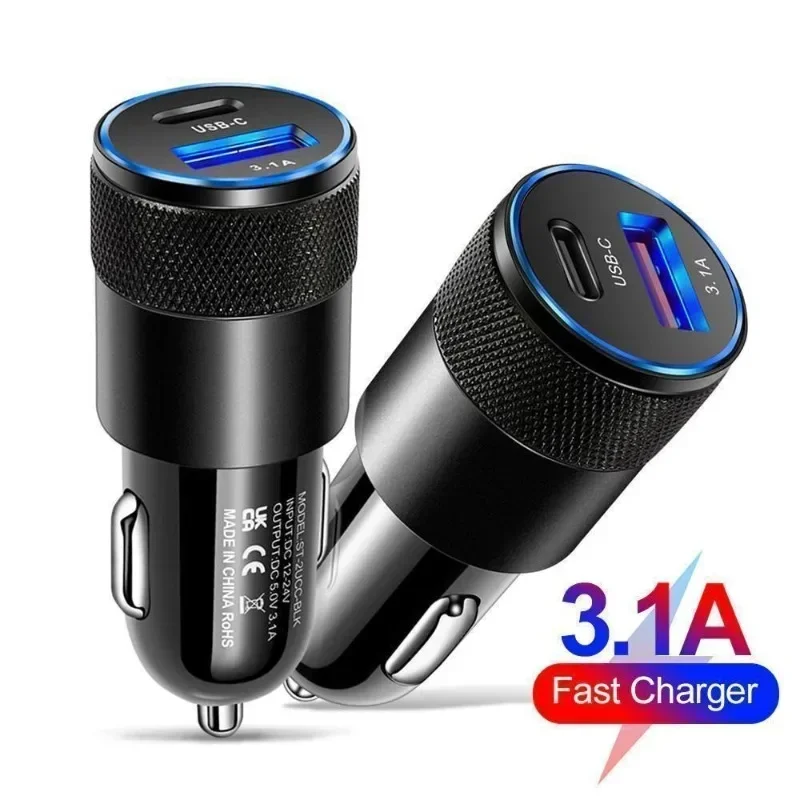
- Small single and twin port chargers that sit almost flush in the socket, with USB-C, USB-A or one of each.
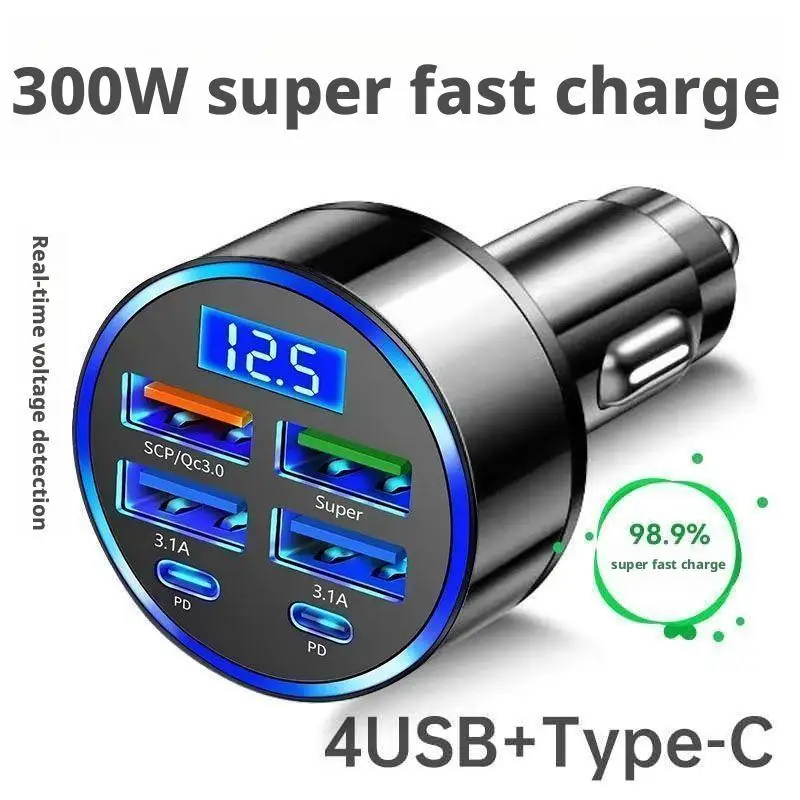
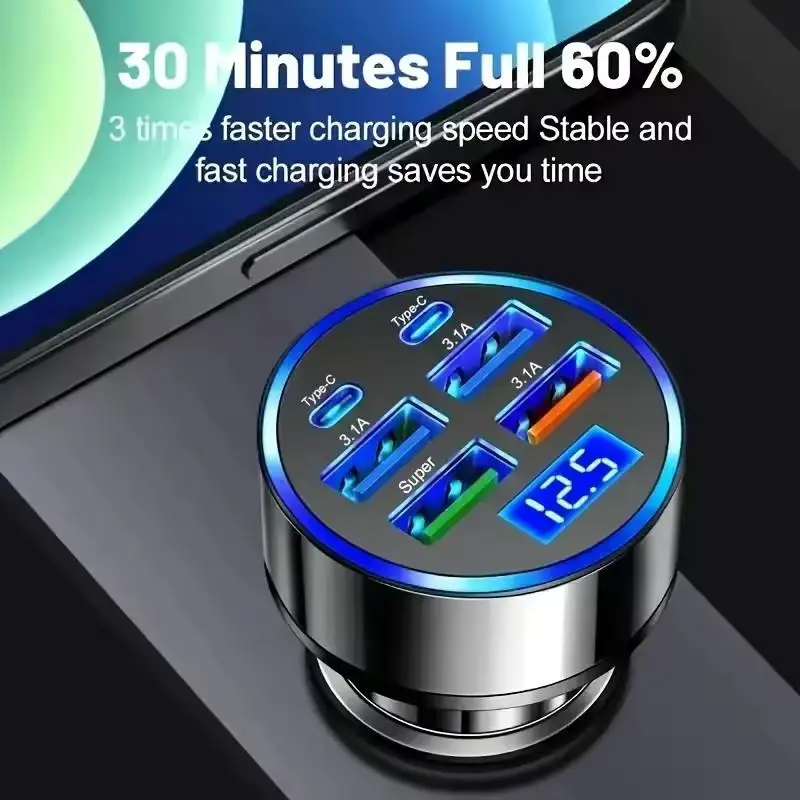
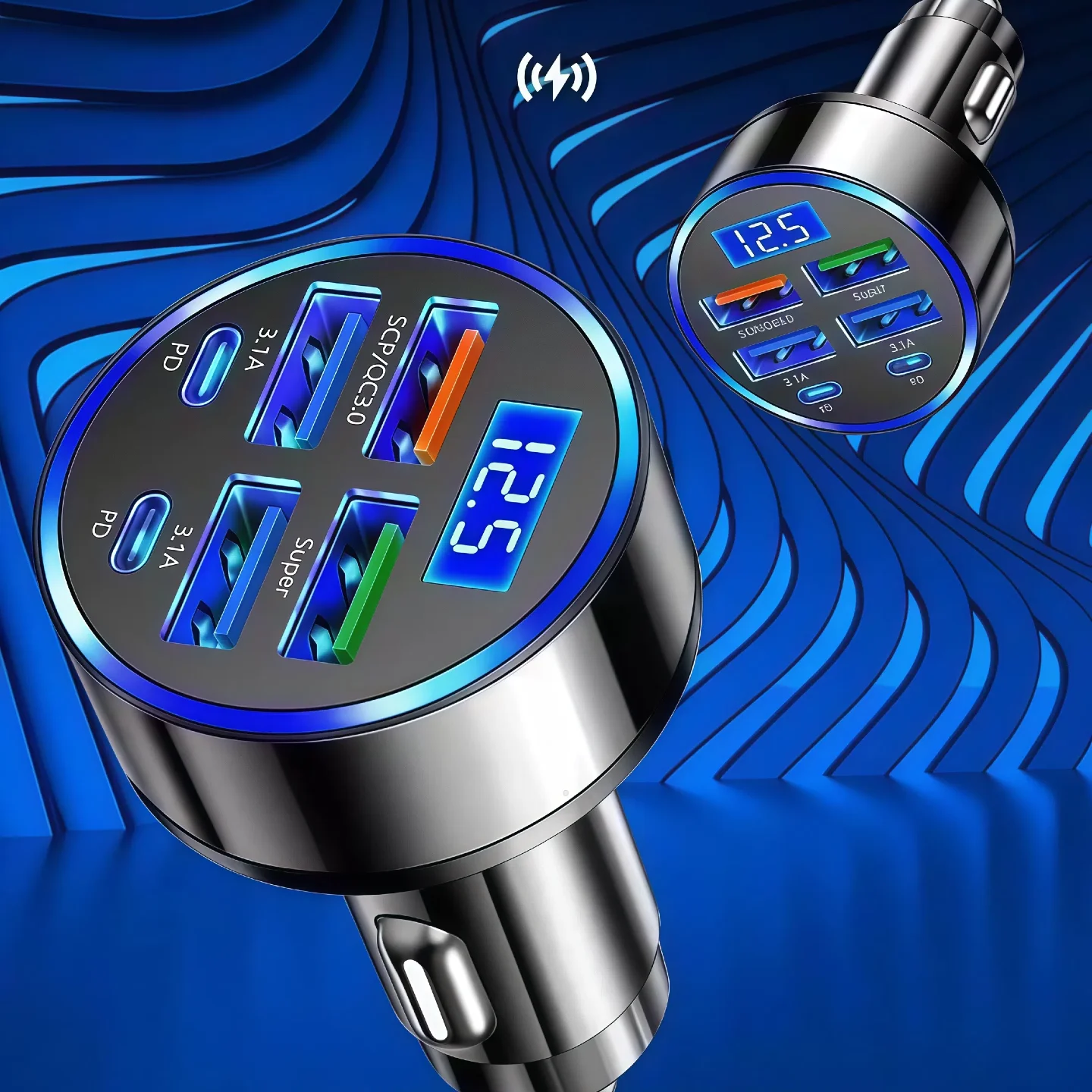
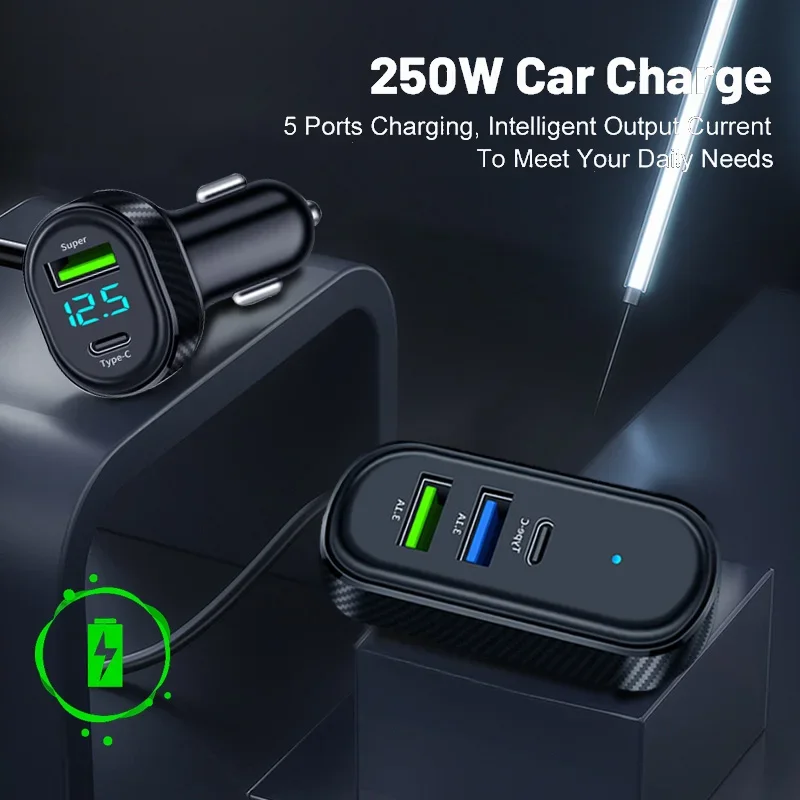
- Multi-port chargers for a car full of devices, with several USB-C and USB-A ports between them.
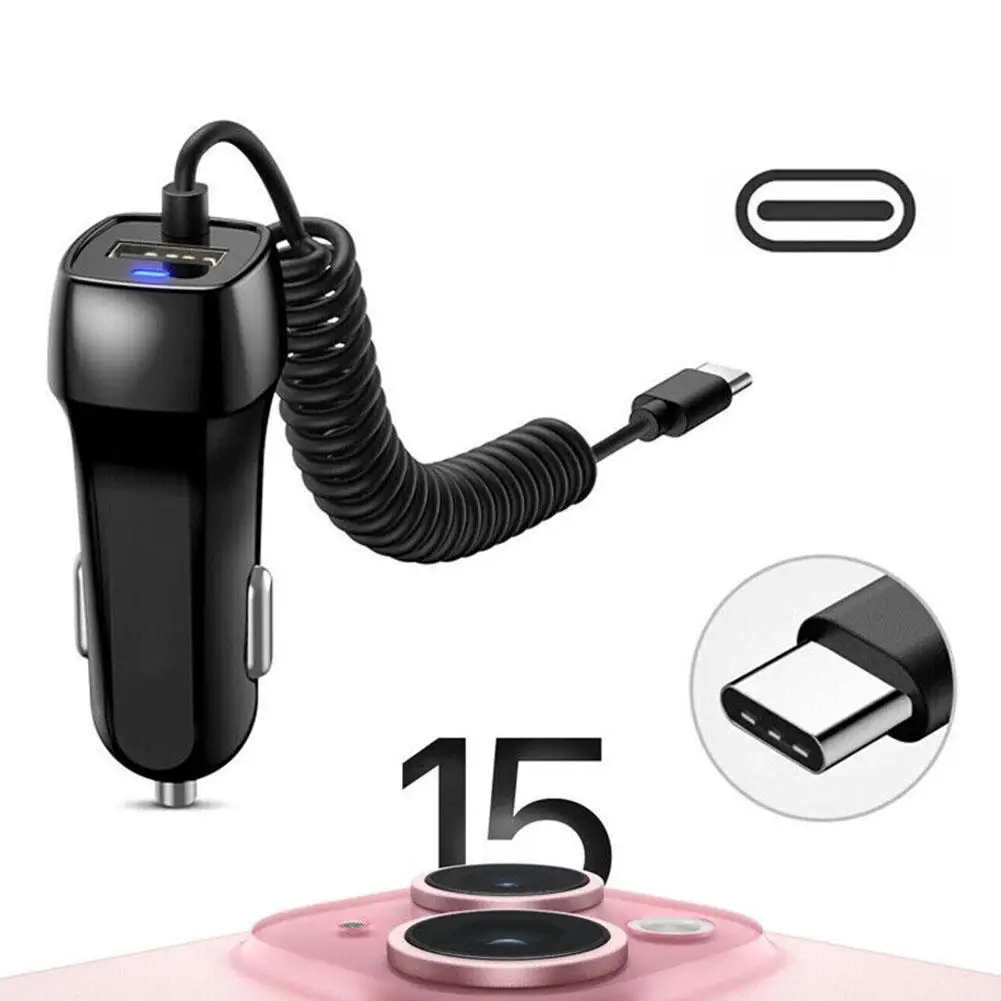
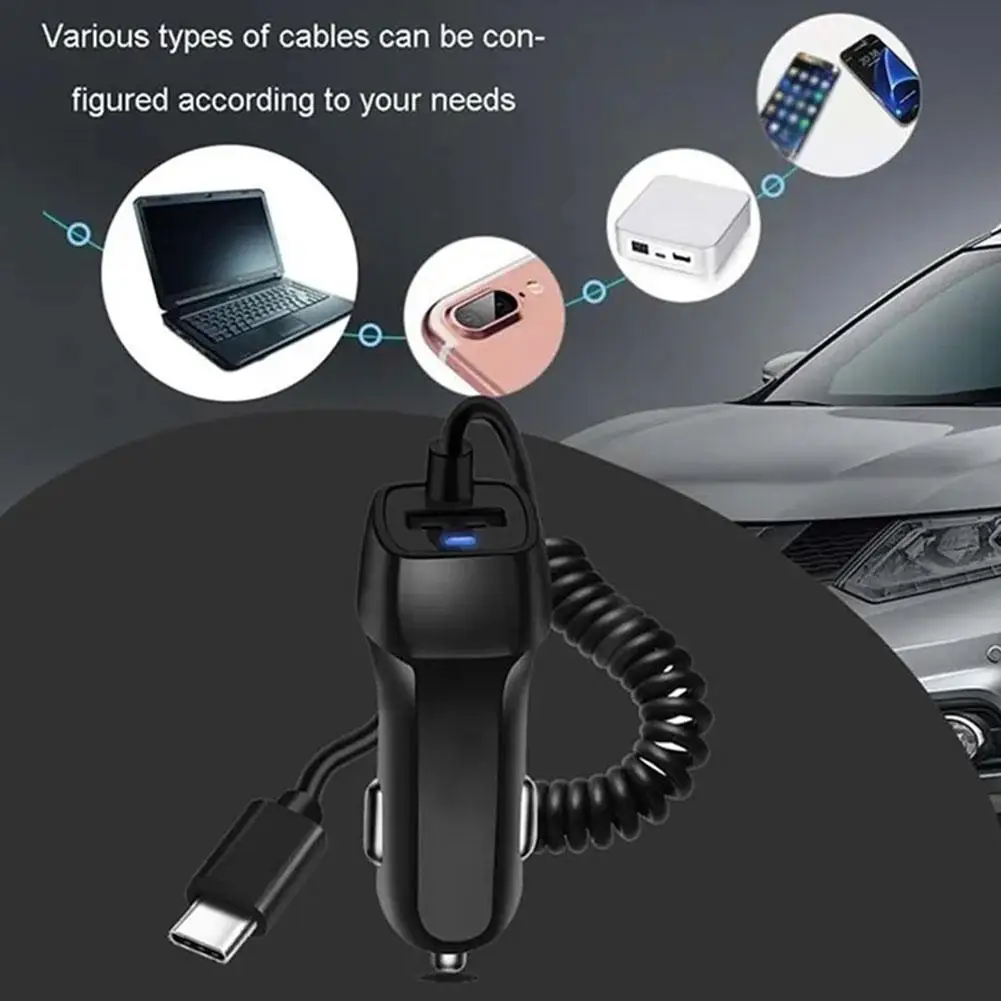
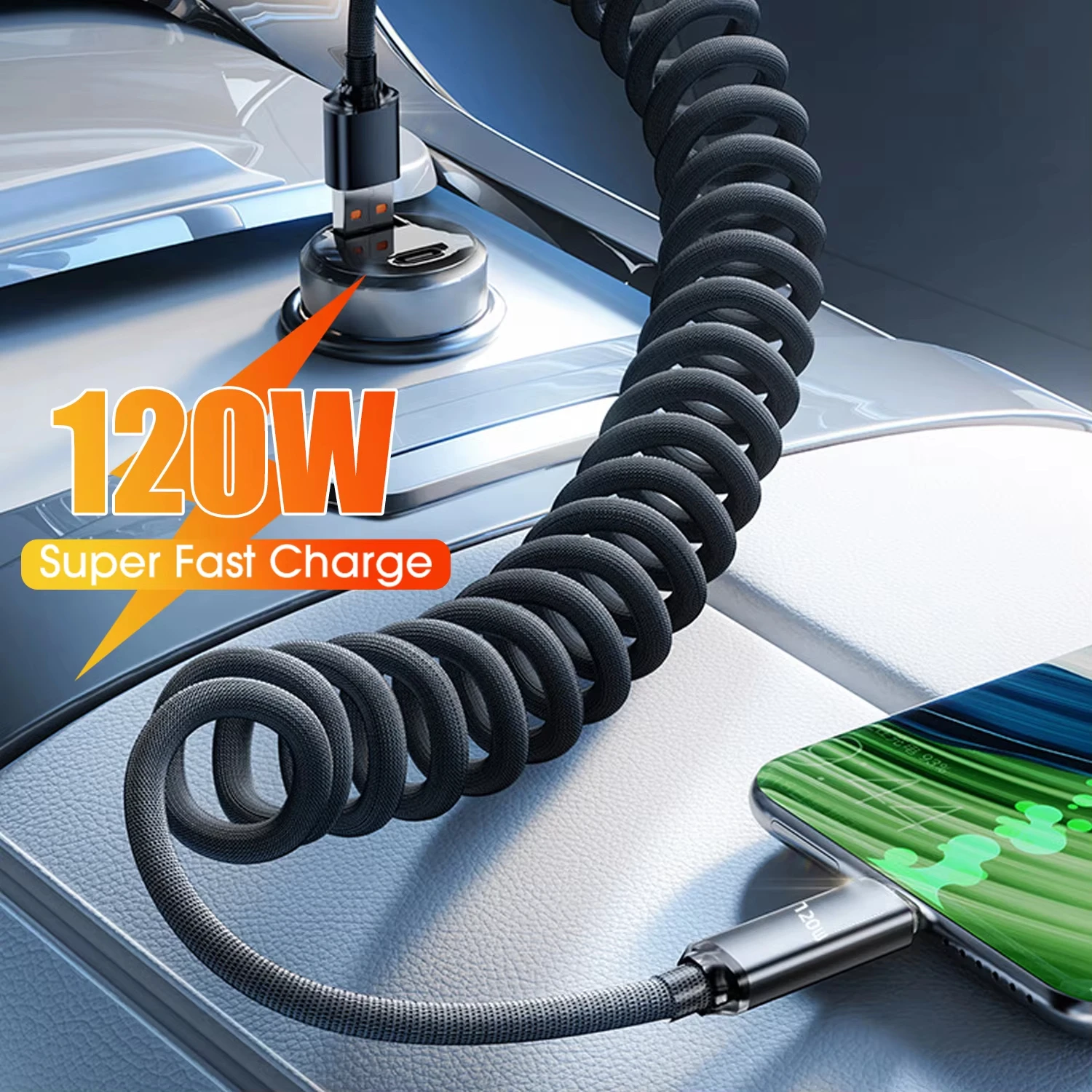
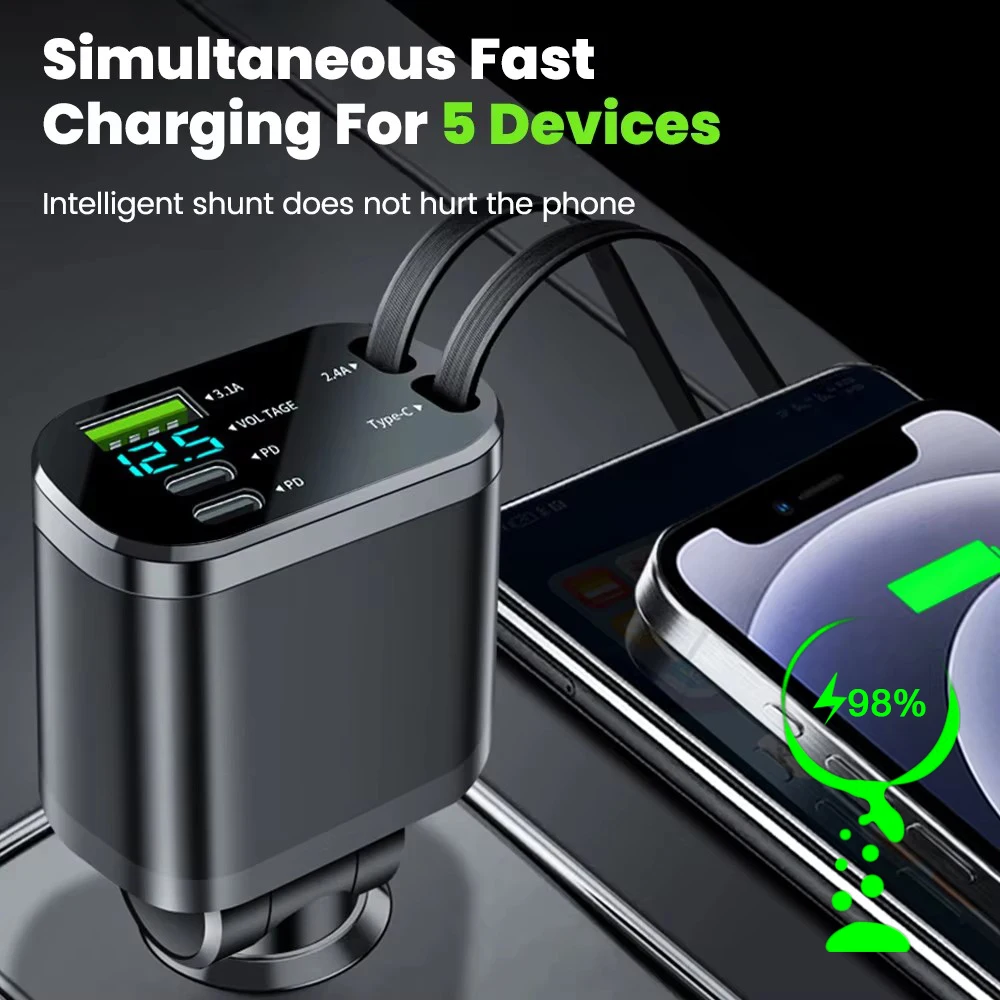
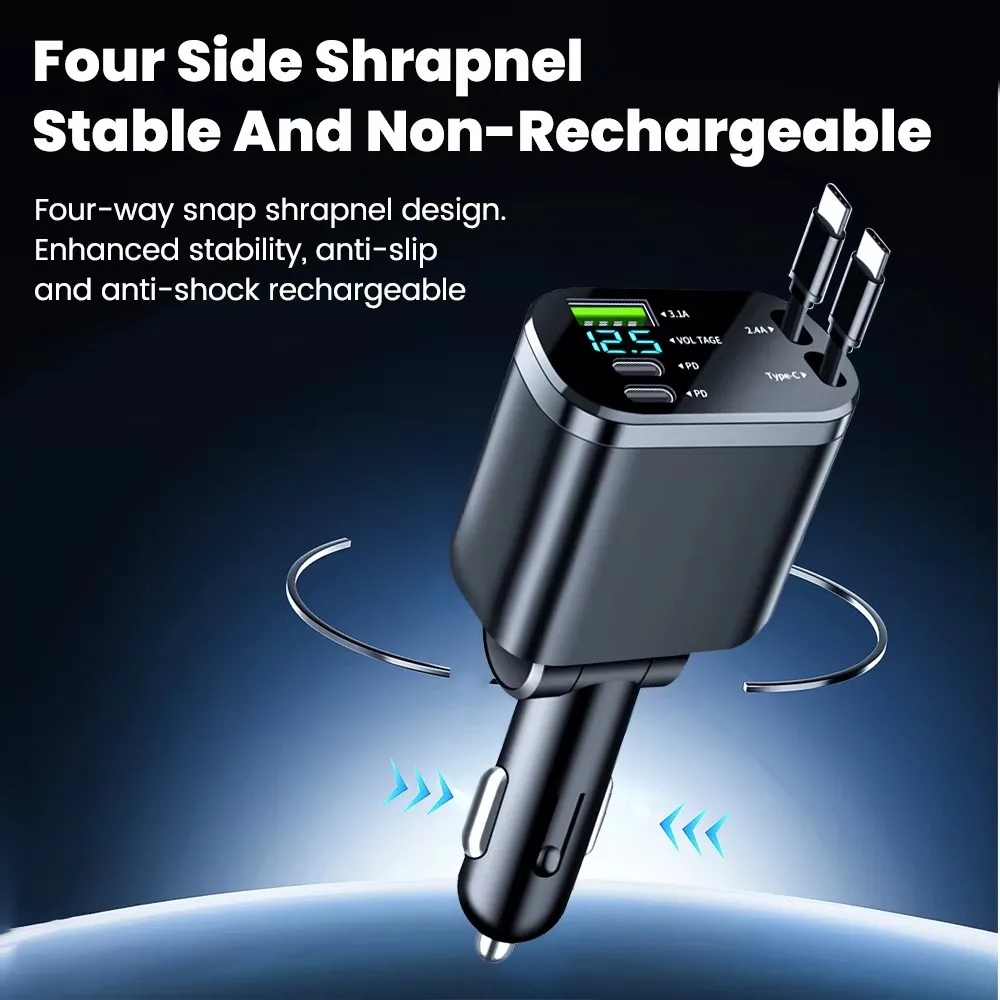
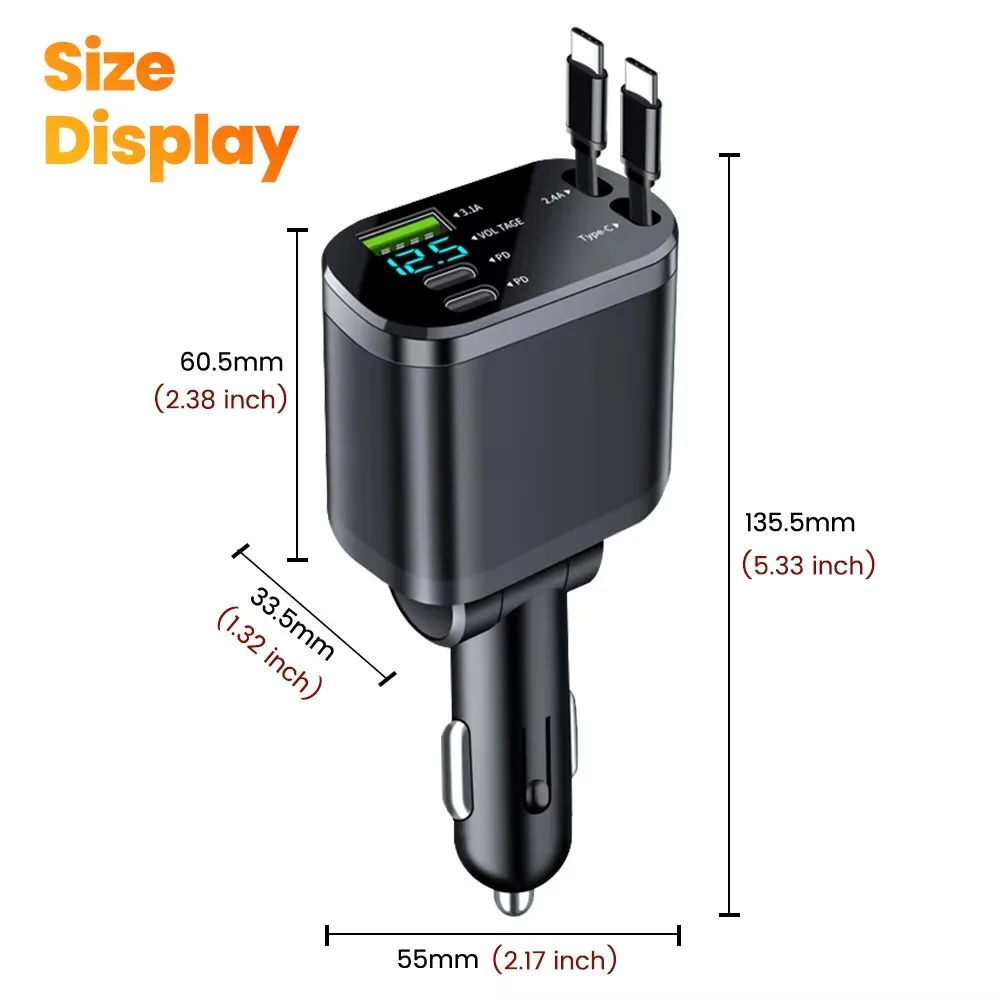
- Chargers with built-in retractable cables, so there is always a cable in the car.
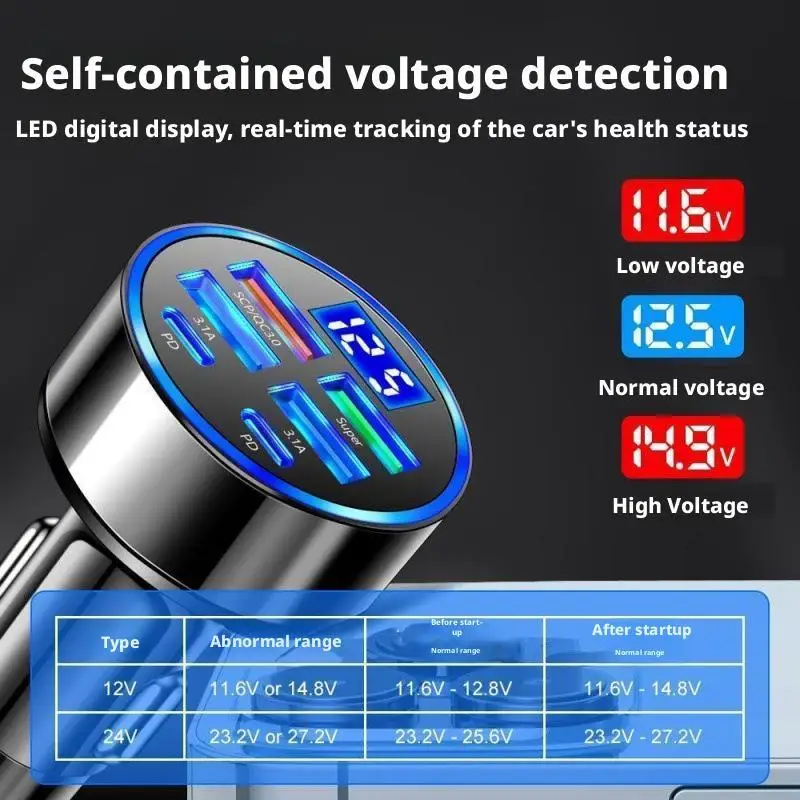
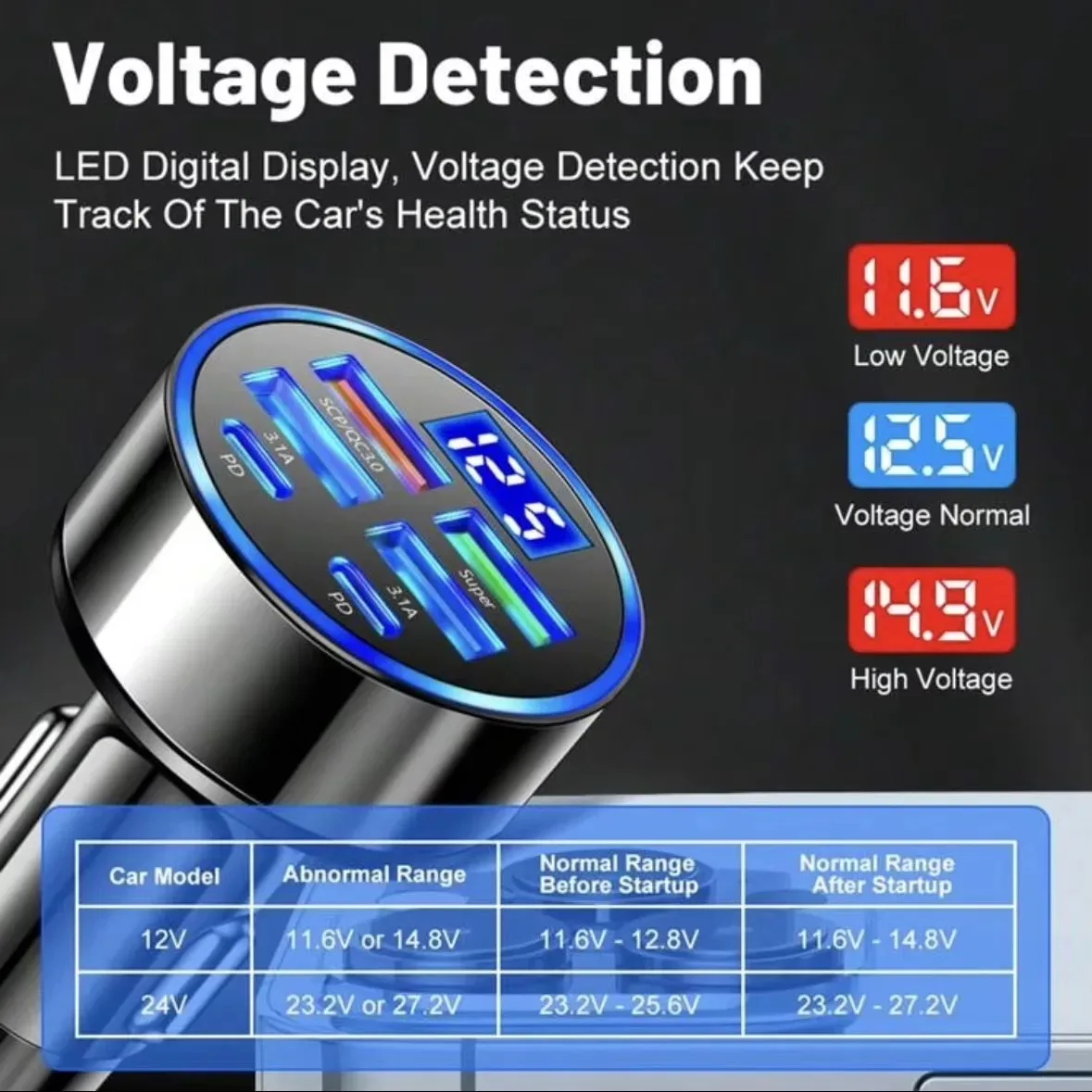
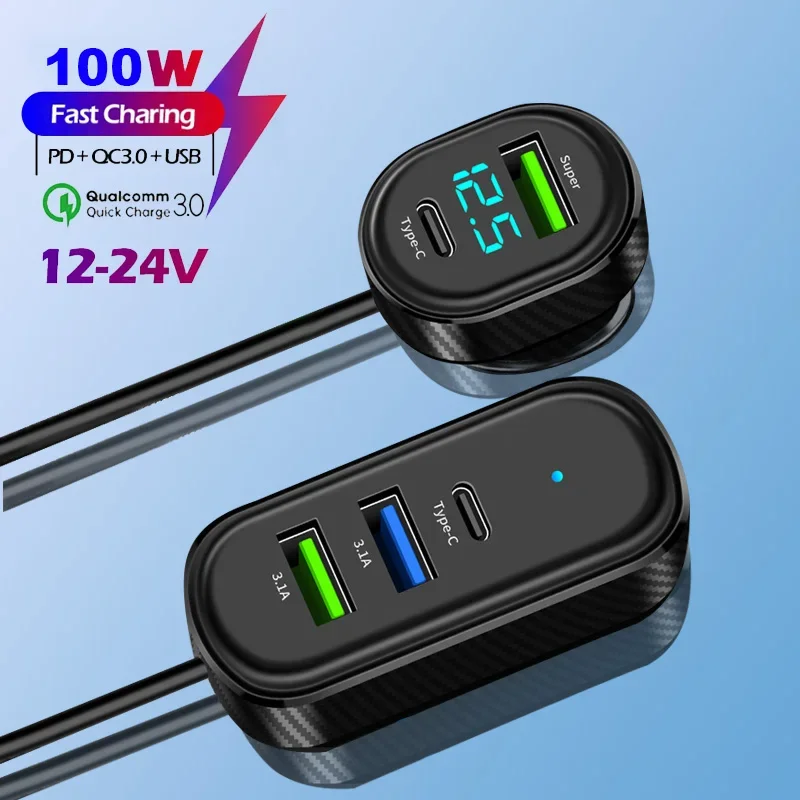
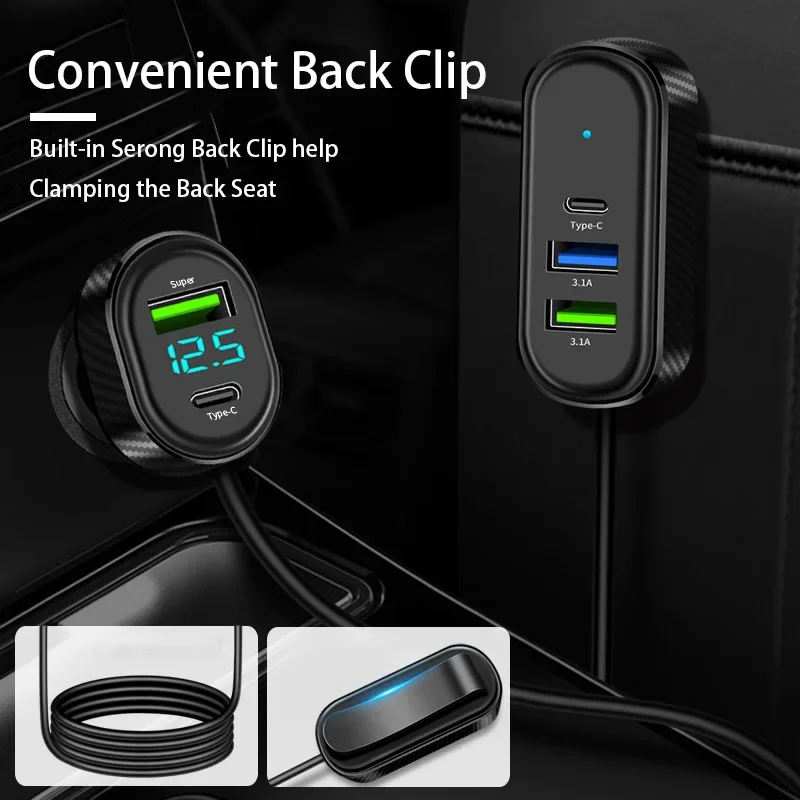
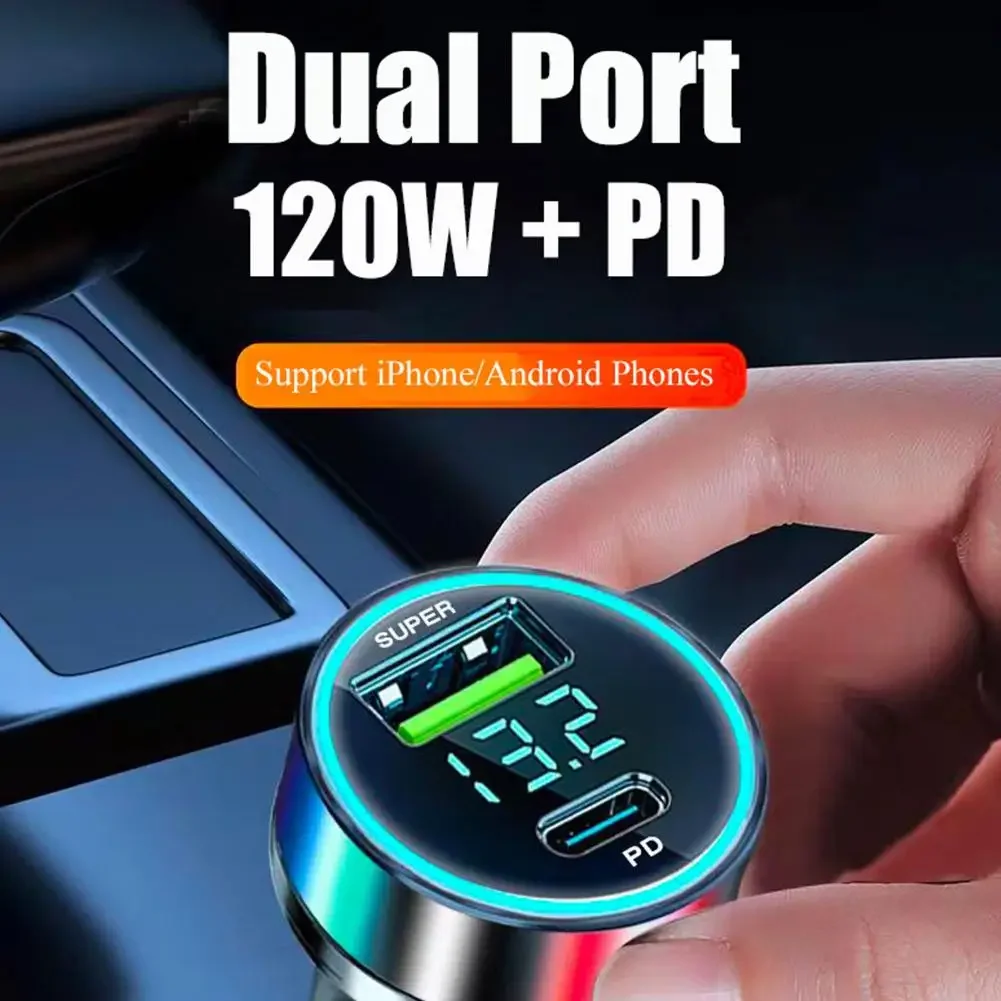
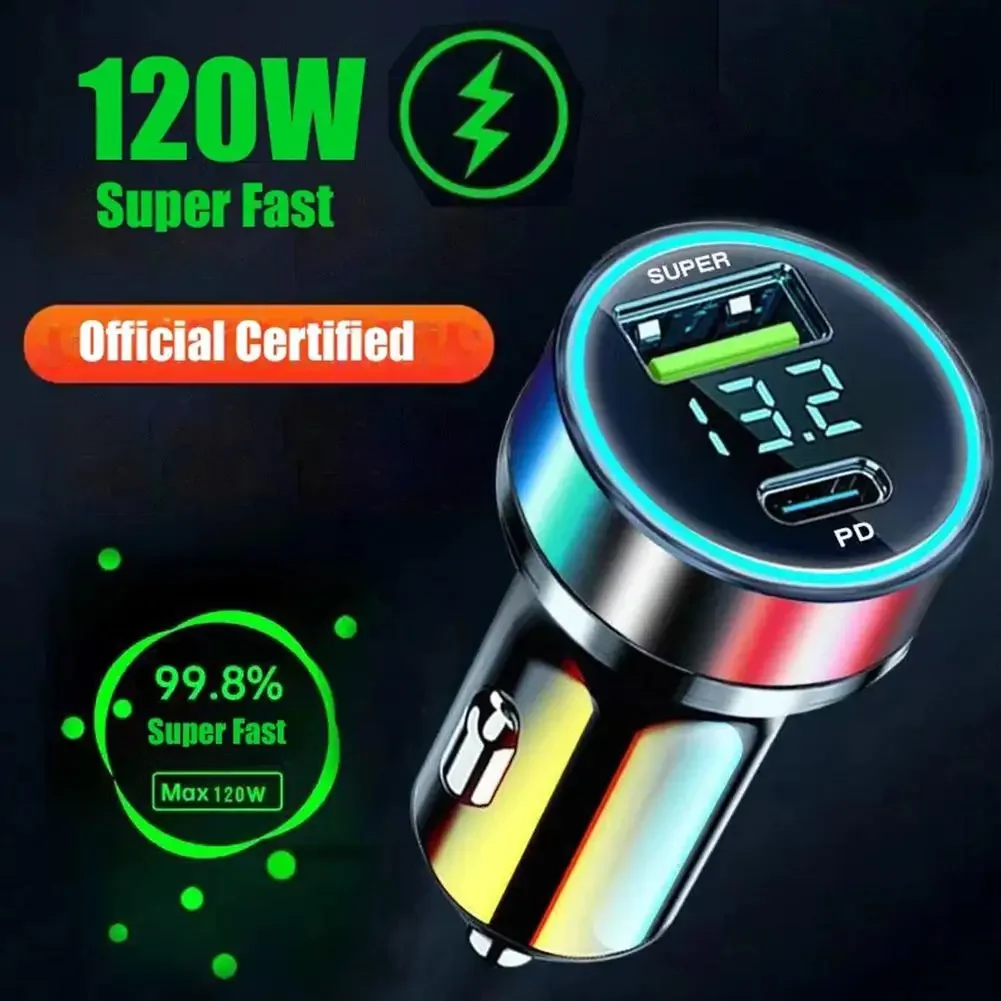
- Chargers on a long lead that reach the back seats, and chargers with a small display showing the car's voltage.
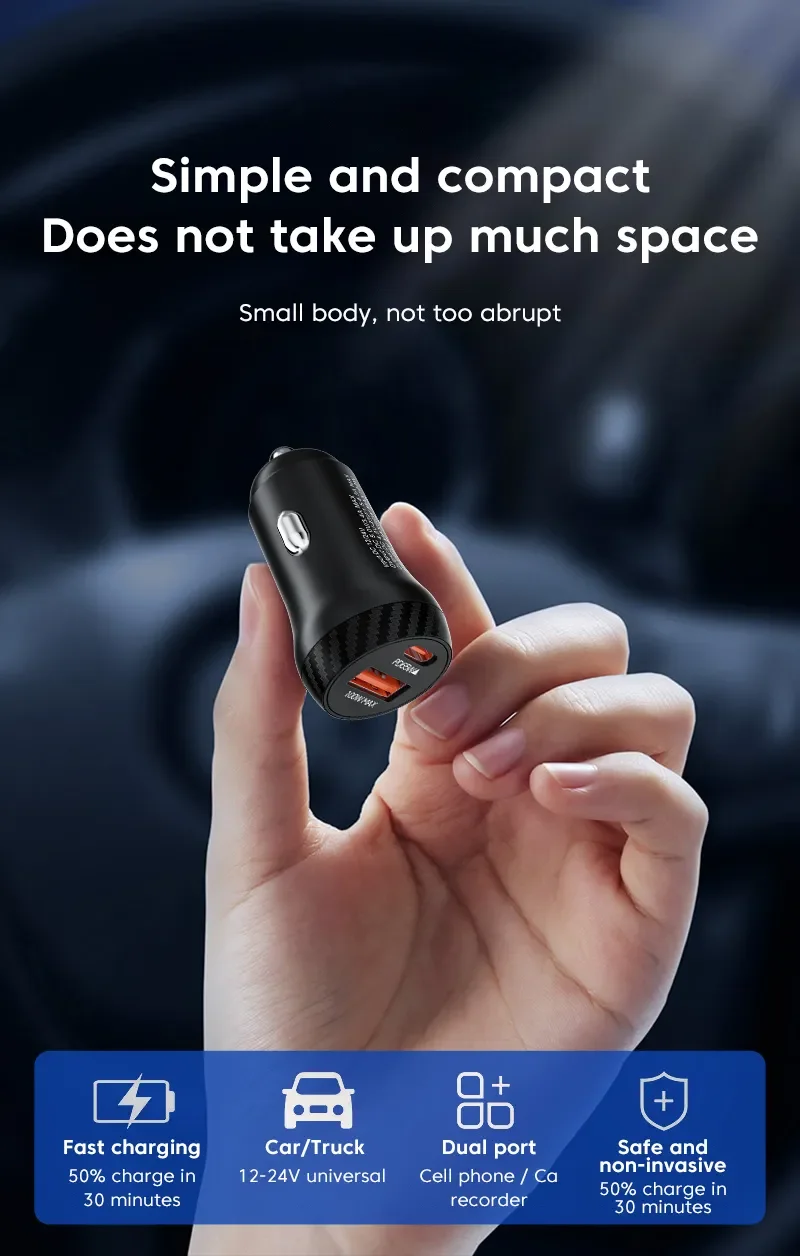
- Chargers that state 12-24V, for vans and larger vehicles whose sockets supply 24V.
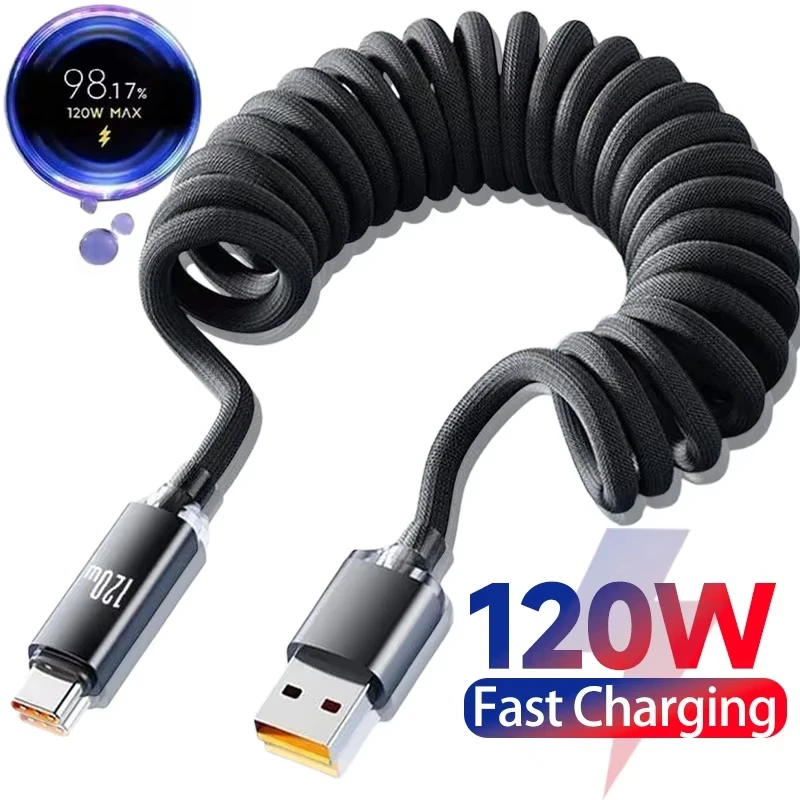
- A retractable USB-C cable to go with them.
How to choose: the numbers on the box
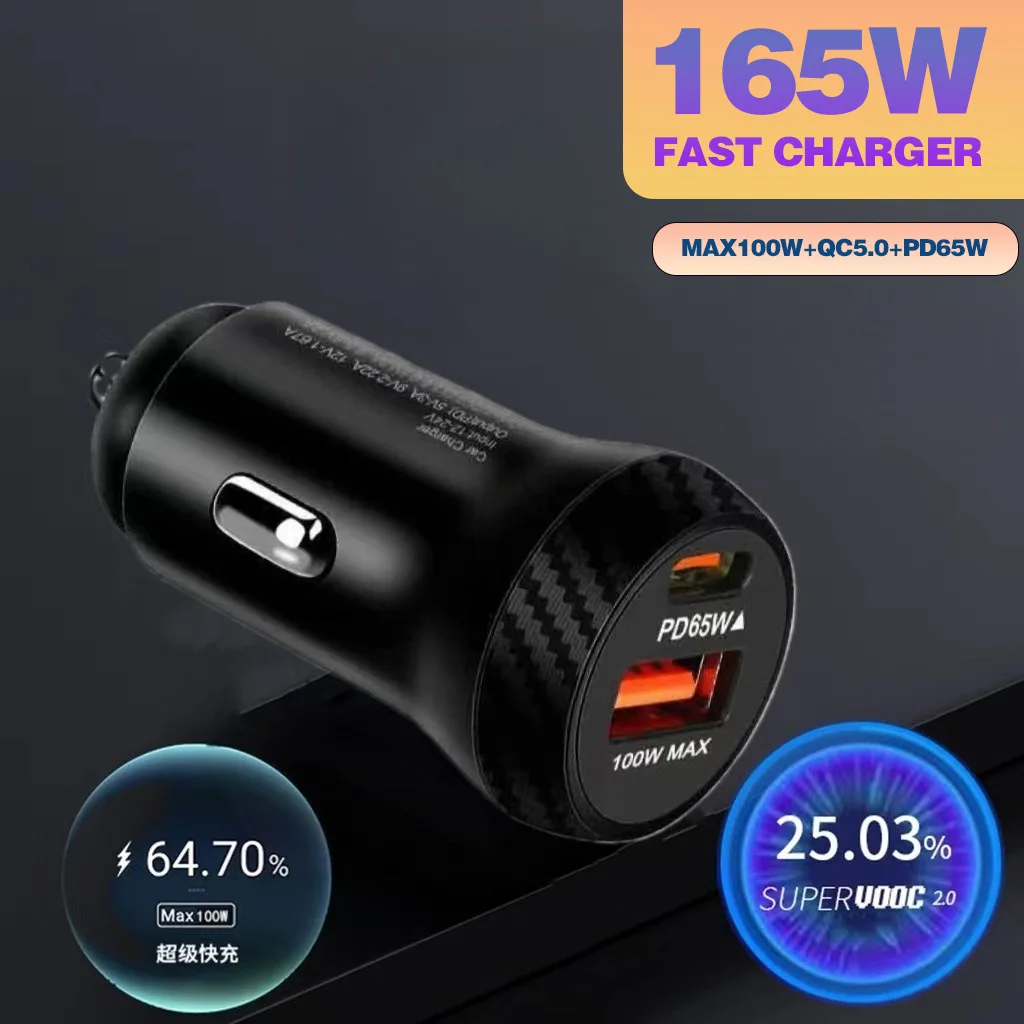
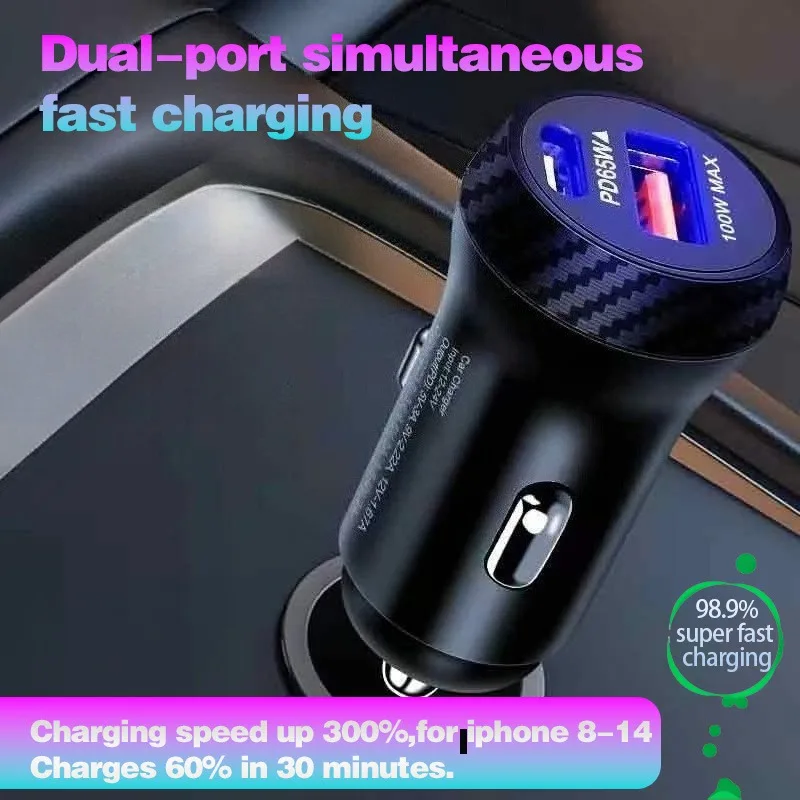
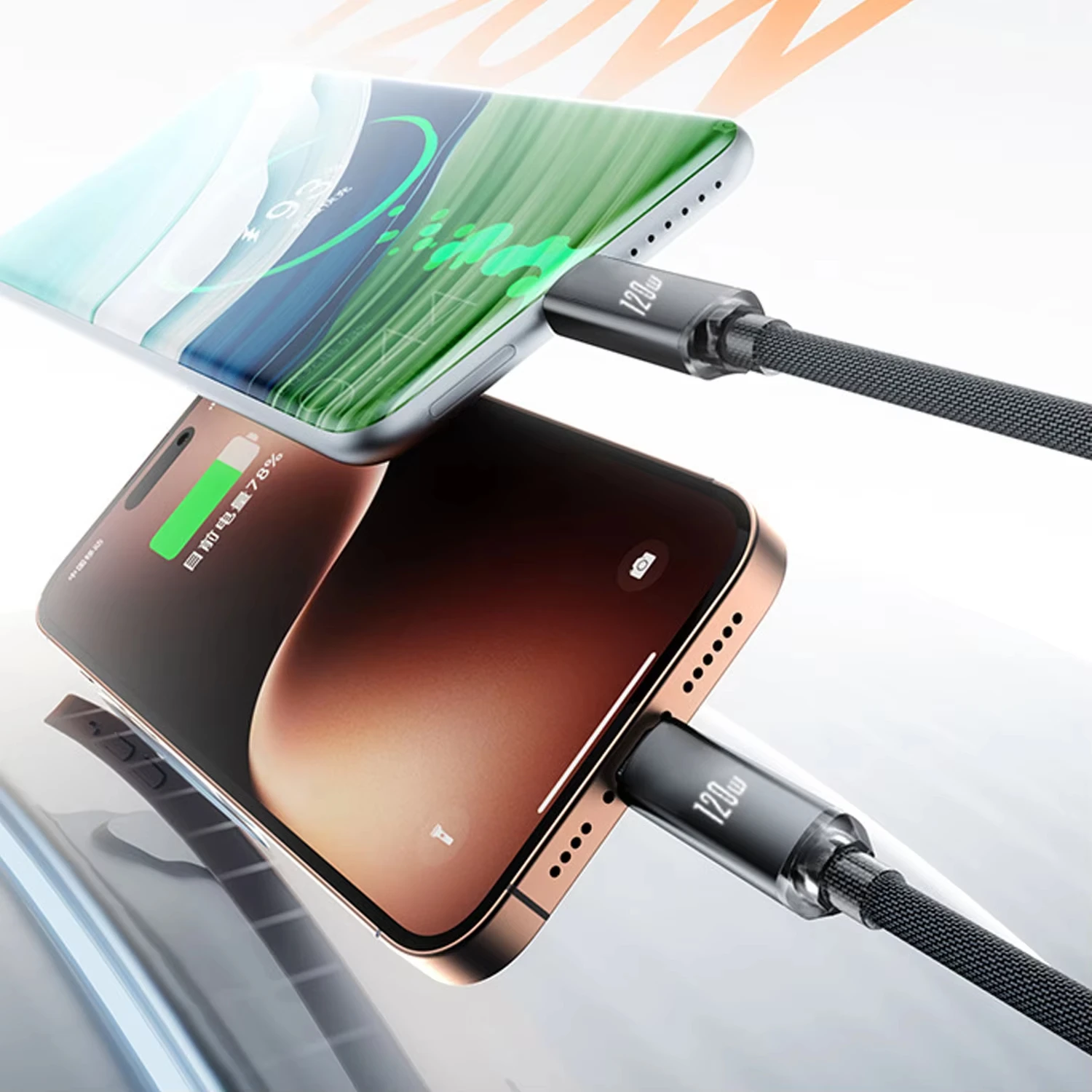
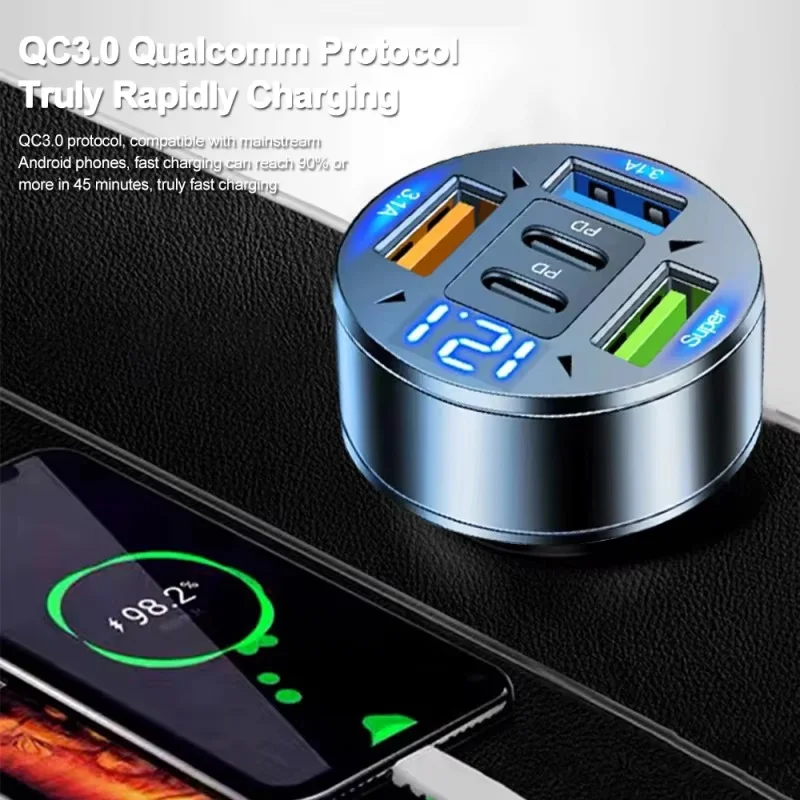
Fast charging over USB-C uses USB Power Delivery, shortened to PD. The phone and the charger agree how much power the phone can take, and the USB Implementers Forum, the body behind USB, says each device takes only the power it requires. So a powerful charger will not harm a phone. Some phones also use other fast charging methods, such as Quick Charge or PPS on many chargers here; the descriptions say which each supports. If phone and charger share none, the phone still charges, only more slowly.
The watts on a multi-port charger are often the total across every port. What matters is the watts from the port you will use, and what each port gives when several are in use, so read the port-by-port figures where the description gives them. For a laptop that charges over USB-C, the port and the cable both need to supply what the laptop asks for.
The cable matters too. A thin or worn cable can slow charging, and the highest power levels need a full-featured USB-C cable made for them. Keep the cable clear of the gear lever and handbrake, and never across the steering wheel.
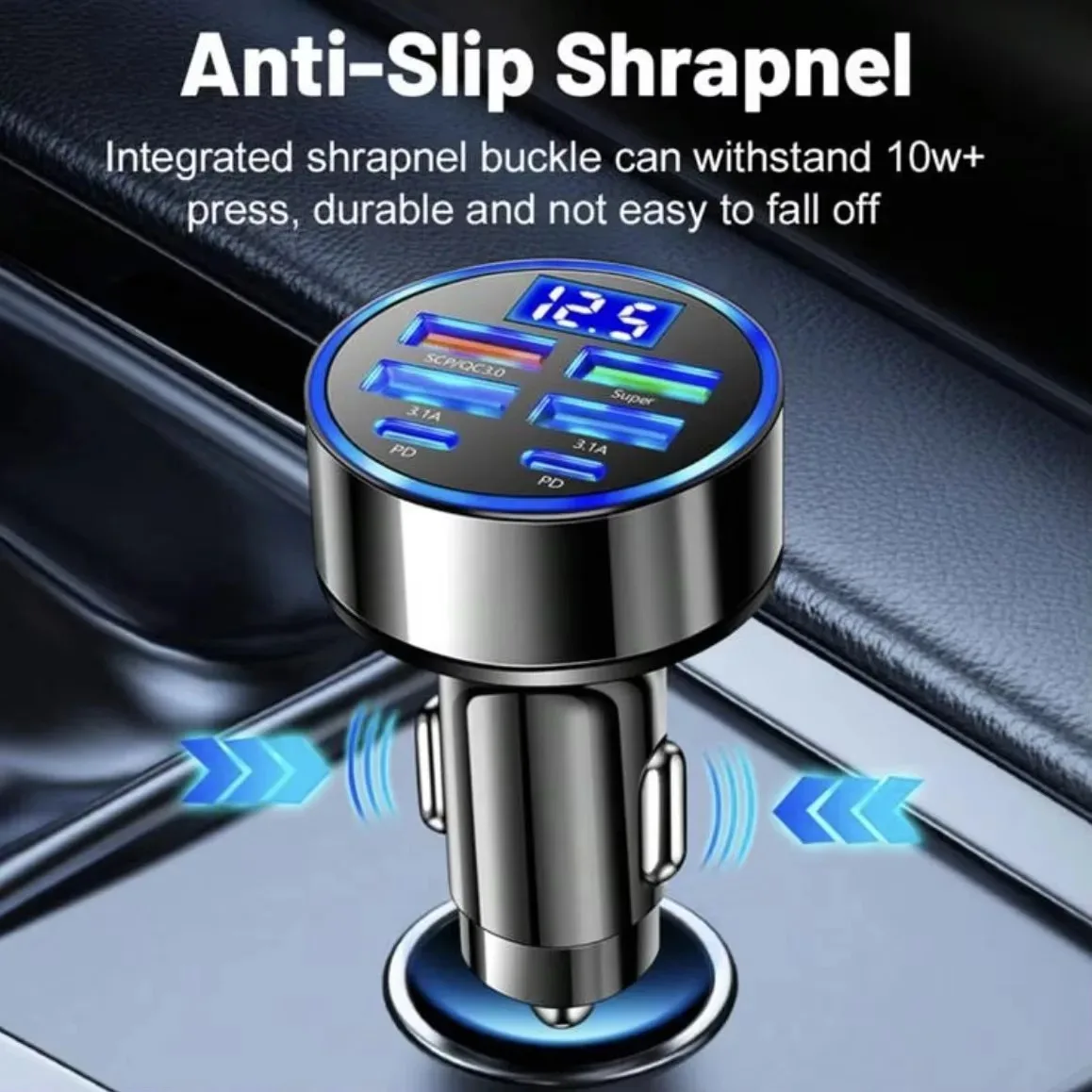
A loose charger cuts in and out over bumps; plugs with sprung side contacts hold better. In many cars the socket goes off with the ignition, but in some it stays live, and anything left running can slowly flatten the battery.
Questions people ask about car chargers
Can I use it in a van?
If the van's socket supplies 24V, choose a charger that states 12-24V.
I need more sockets, not more ports. What then?
See 12V socket splitters. The guide car phone chargers, socket splitters and CarPlay explains more.
Delivery is included in every price and tracked to your door.
More to look at