Most dogs love a car journey, and most cars do not love dogs. Hair works its way into the fabric, muddy paws mark the seats, claws scratch the boot, and a wet dog leaves a smell that lingers. More importantly, a dog moving around the car can distract the driver or be hurt if the car stops suddenly. This guide starts with what the Highway Code says about dogs in cars, then goes through seat covers and hammocks, what makes one better than another, the boot, keeping hair and smells under control, and planning a long journey with a dog.
What the Highway Code says about dogs in cars
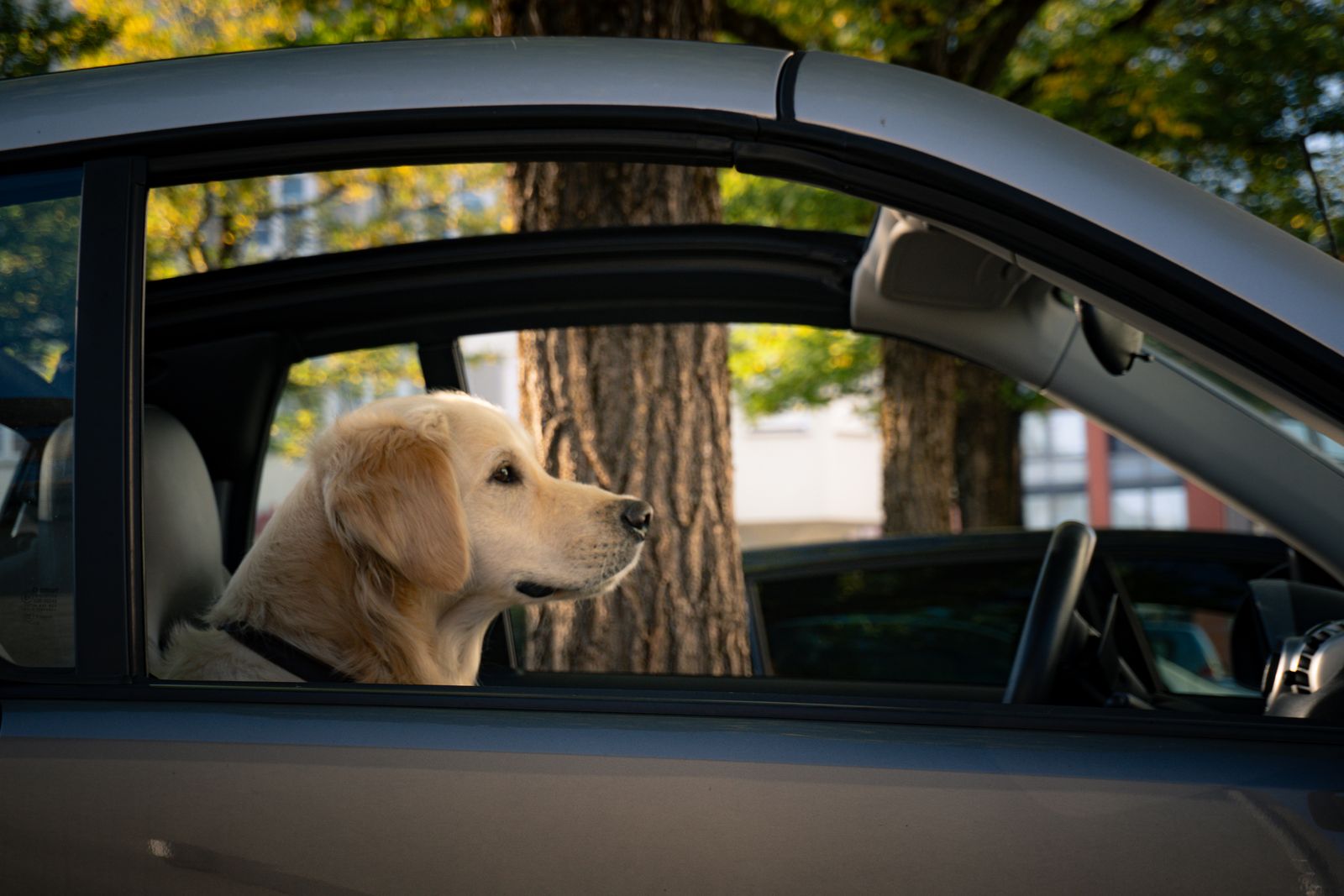
Rule 57 of the Highway Code deals with animals in vehicles. In short, it says that when you are in a vehicle you should make sure dogs or other animals are suitably restrained, so that they cannot distract you while you are driving, or injure you, or themselves, if you stop quickly.
The ways of restraining a dog it names
The rule lists a seat belt harness, a pet carrier, a dog cage or a dog guard as ways of restraining animals in cars. Which suits you depends on the dog's size and temperament, the car, and where in the car the dog travels. A small dog might travel in a carrier on the back seat, a medium dog in a harness clipped to the seat belt, and a large dog in the boot behind a guard or in a cage. Whatever you choose, it should be fitted as its maker's instructions say and suit the size of your dog.
Advice, but it still counts
Rule 57 is written as advice rather than as a MUST, which is how the Highway Code marks rules that are legal requirements in themselves. But the Code's introduction explains that, although failing to follow its other rules will not on its own lead to a prosecution, the Code may be used in evidence in court to help establish liability. Separately, the law does require every driver to keep proper control of the vehicle and a full view of the road and traffic ahead, and a loose dog climbing into the front or standing up at the window can get in the way of both.
A seat cover is not a restraint
This is worth saying plainly, because it is easy to confuse the two. A seat cover or a hammock keeps the car clean and can stop a dog sliding off the seat into the footwell, but it does not hold the dog in place if you brake hard. Use a cover for the seats, and a restraint for the dog.
Never leave a dog in a hot car
The other rule every dog owner should know is about the parked car. The RSPCA says never leave a dog alone in a car on a warm day, even for a few minutes, and that parking in the shade or leaving the windows open will not keep the car cool enough. It gives the example that when it is 22°C outside, a car can reach 47°C within an hour. The Met Office gives the same warning, adding that a car can heat up quickly even on an overcast day, and that leaving the windows open and a bowl of water is not enough. If you see a dog in a hot car that is showing signs of heatstroke, both advise calling 999 and reporting it to the police.
Seat covers or a hammock
For a dog on the back seat there are two main kinds of cover, and they suit different dogs and different cars.
Bench covers
A bench cover lies over the rear seat base and backrest, held by straps around the rear headrests and anchors pushed into the gap at the back of the seat. Many have side flaps that hang over the edges of the seat to protect the door side and the seat edge when the dog jumps in. A bench cover leaves the footwells open, so a person can still sit on part of the seat, and some are split so one side can be folded back for a passenger while the dog uses the other side.
Hammocks
A hammock also clips to the front headrests, so the cover forms a sling across the whole back of the car, covering the seat, the footwells and the backs of the front seats. It keeps all the mud and hair in one place, stops the dog stepping down into the footwell or slipping off the seat when you brake, and makes it harder for the dog to climb into the front. Many hammocks have a mesh panel in the front part so the dog can see you and you can see the dog, and many can be unclipped from the front headrests to turn back into a bench cover when a passenger needs the back seat.
Which suits your dog
- For a dog that rides on the back seat alone, a hammock protects the most of the car and keeps the dog on the seat.
- For a dog that shares the back seat with people, a split bench cover lets one side be used by a passenger.
- For a dog that travels in a harness clipped to the seat belt, make sure the cover has openings for the seat belt buckles, so the harness can be clipped in without lifting the cover.
The dog seat covers and hammocks range has both kinds. If the dog also rides on a front seat now and then, or shares the car with muddy people, waterproof car seat covers protect the front seats too.
Waterproof, scratch-proof, non-slip: what matters
Dog covers are described with a lot of words, and three of them matter more than the rest.
Waterproof
A wet dog after a walk in the rain or a swim soaks a seat quickly, and the damp sits in the foam underneath and smells for days. A properly waterproof cover has a waterproof layer between the top fabric and the seat, so water stays on top until you can wipe it or take the cover out. The seams are the weak point. Look for a cover with few seams across the part the dog lies on, and check the description says the cover is waterproof rather than only water resistant, which means it will shed a splash but not a soaking.
Scratch-proof
Claws are what wear a cover out, especially where the dog jumps in and turns around before lying down. A tough, tightly woven top fabric, often quilted, stands up to claws far better than a thin one, and quilting also stops the cover tearing in a long line if a claw does catch. No cover is completely claw-proof, but a tougher one lasts much longer and protects the seat underneath for longer.
Non-slip
Non-slip matters in two ways. The backing should grip the seat, usually with a rubber-dotted or textured underside, so the cover does not slide around as the dog moves and the car corners. And the top should give the dog something to grip, so it is not sliding about. A dog that feels secure is calmer, and a calm dog distracts the driver less. Seat anchors pushed into the gap between the seat base and the backrest stop the cover creeping forward.
Also worth checking
- Machine washable, so hair and mud come out properly rather than being brushed around.
- Side flaps, to protect the door side of the seat and the door trim.
- A size that matches your rear seat. A cover that is too small leaves the edges of the seat exposed, and one that is too big bunches up.
- Openings or a zip for the seat belt buckles, if the dog wears a harness or a passenger needs a seat.
Dogs in the boot: liners and barriers
For a large dog, or more than one, the boot of an estate, hatchback or SUV is often the best place to travel. It keeps the seats free for people and keeps the mess in one area. The Highway Code lists a dog guard among the ways of restraining a dog, and a cage in the boot is another.
Boot liners
A boot liner covers the floor of the boot and usually its sides, so hair, mud and water stay off the carpet and claws stay off the trim. Many have a flap that folds out over the rear bumper, which protects the paintwork from claws as the dog jumps in and out, and folds back inside when you close the boot. Waterproof fabric liners are soft for the dog to lie on and can be washed. Rubber and moulded liners have raised edges that hold water and mud and can be hosed down. Look at the boot and cargo liners, and measure the boot floor before you choose, with the rear seats up, including the width between the wheel arches, which is usually the narrowest point.
Barriers and dog guards
A barrier, often called a dog guard, sits between the boot and the rear seats and stops the dog climbing over into the car. Some fix to the rear headrest posts, so they are quick to fit and need no tools. Others are telescopic and brace between the floor and the roof. Barriers that fit the headrest posts work with the rear headrests in place; telescopic ones need a firm, flat surface top and bottom. Whatever kind, it must be fitted firmly, exactly as its instructions say, and checked from time to time, because a loose barrier rattles and can give way. A barrier keeps the dog out of the passenger area, but it does not stop a dog being thrown around inside the boot, so think about the dog's size and the space it has. Browse the pet barriers with your car's headrests and boot height in mind.
Comfort in the boot
Take out the parcel shelf if it limits the air around the dog, and keep heavy or sharp things out of the boot with the dog, because anything loose can slide into it under braking. Remember too that a dog in the boot is the hardest for you to see, so it is harder to tell whether it is too warm or unsettled.
Keeping hair and smells under control
Even with a cover in place, dog hair finds its way onto the carpets, into the seat seams and onto everyone's clothes. A little regular cleaning stops it building up.
Hair
Dog hair weaves itself into car carpet and fabric, which is why a normal vacuum often struggles to lift it. Go over the carpet with a rubber brush or a damp rubber glove first to roll the hair into clumps, then vacuum it up. A car vacuum cleaner that runs from a battery or the 12V socket makes it easy to do in a few minutes every week, rather than a big job every few months. A microfibre cloth picks hair off the dashboard and door trims, and cleaning gel and detailing brushes get it out of the vents and the gaps around the buttons.
Mud and wet
Keep an old towel in the car and dry the dog's paws and coat before it gets in. Rubber car floor mats in the footwells hold water and mud where they can be tipped out, and are a good idea in a car that carries wet dogs and wet walkers. Take the cover or liner out to dry after a wet trip rather than closing the car up with it damp.
Smells
Dog smell lives in fabric and in damp, so the first step is cleaning: wash the covers and liners regularly, vacuum the seats and carpets, and let the car air out with the doors open on a dry day. An air freshener on its own only covers the smell. Odour eliminators, such as charcoal bags, take smells out of the air rather than masking them, and a car air purifier can help in a car that carries dogs every day. If you do use a scented freshener, choose a gentle one, because dogs' noses are far more sensitive than ours. The guide to choosing a car air freshener goes further into dealing with the cause.
Long journeys with a dog
A long drive with a dog needs a little more planning than one without, mostly around stops, heat and making sure the dog is settled.
Before you set off
- Take the dog for a walk first, so it is ready to settle and has been to the toilet.
- Put the dog's restraint on, or the dog in its place in the boot, before you set off, and check it is secure.
- Pack water and a bowl, the lead, a towel, poo bags and anything the dog needs to be comfortable, such as its own blanket, which smells of home.
- Check the cover or liner is in place and the dog has room to lie down and turn round.
Plan the stops
The Highway Code recommends that drivers take a break of at least 15 minutes after every two hours of driving. Those breaks suit a dog too: a drink, a short walk and a chance to stretch. When you stop, clip the lead on before you open the door or the boot, so the dog cannot jump out into a car park or near traffic.
Heat on the journey
On a warm day the dog cannot be left in the car while you go inside, even for a few minutes, so plan stops where the dog can come with you or someone can stay outside with it in the shade. While you are driving, keep the air moving, and remember that the sun through the side windows can make one part of the car much hotter than the rest. Side window sun shades on the rear windows help, as long as nothing blocks the driver's view out to the sides or behind. Watch the dog for heavy panting or restlessness, and stop somewhere shaded if it seems too warm.
Unfamiliar places
A dog that is calm on the way to the park can be unsettled by a long motorway drive, a ferry queue or a strange car park. Bring something familiar, keep the routine at stops the same as at home, and give the dog a few minutes to settle after each stop before you pull away.
Keeping the driver's attention on the road
A dog that whines, barks or moves about is a distraction, and the Highway Code's advice on restraint is about exactly that. A restraint that keeps the dog in one place, a hammock or barrier that keeps it out of the front, and a dog that has been walked before the journey all help. If the dog does become unsettled, find somewhere safe to stop rather than turning round to deal with it while driving.
Questions
Is it illegal to have a dog loose in the car?
Rule 57 of the Highway Code says dogs should be suitably restrained. It is advice rather than a rule written as a MUST, but the Code can be used in evidence in court, and the law does require you to keep proper control of the car and a full view of the road. A loose dog can put you in breach of both.
Does a hammock or seat cover count as a restraint?
No. It keeps the car clean and can stop the dog slipping into the footwell, but it does not hold the dog if you brake hard. The Highway Code names a seat belt harness, a pet carrier, a dog cage or a dog guard.
Can my dog sit on the front seat?
The Highway Code does not say which seat. It says the dog should be restrained so it cannot distract you. Many owners find the back seat or the boot keeps the dog well away from the driver, with a hammock or a barrier helping to keep it there.
Is it all right to leave the dog in the car with the windows open?
Not on a warm day. The RSPCA and the Met Office both say parking in the shade or leaving the windows open is not enough, and that a car can heat up quickly even when it is overcast.
How do I stop the cover sliding about?
Choose one with a non-slip backing, pull the headrest straps tight, and push the seat anchors well down into the gap between the seat base and the backrest.
Where to go next
Everything in this guide is gathered in the range for dog owners, and the interior cleaning kits take care of the rest. Delivery is included in every price and tracked to your door. Other guides that help:
- Choosing car seat covers: covering the seats people use
- Choosing car floor mats: rubber mats and boot liners for mud and wet
- Choosing a car air freshener: removing dog smells rather than covering them