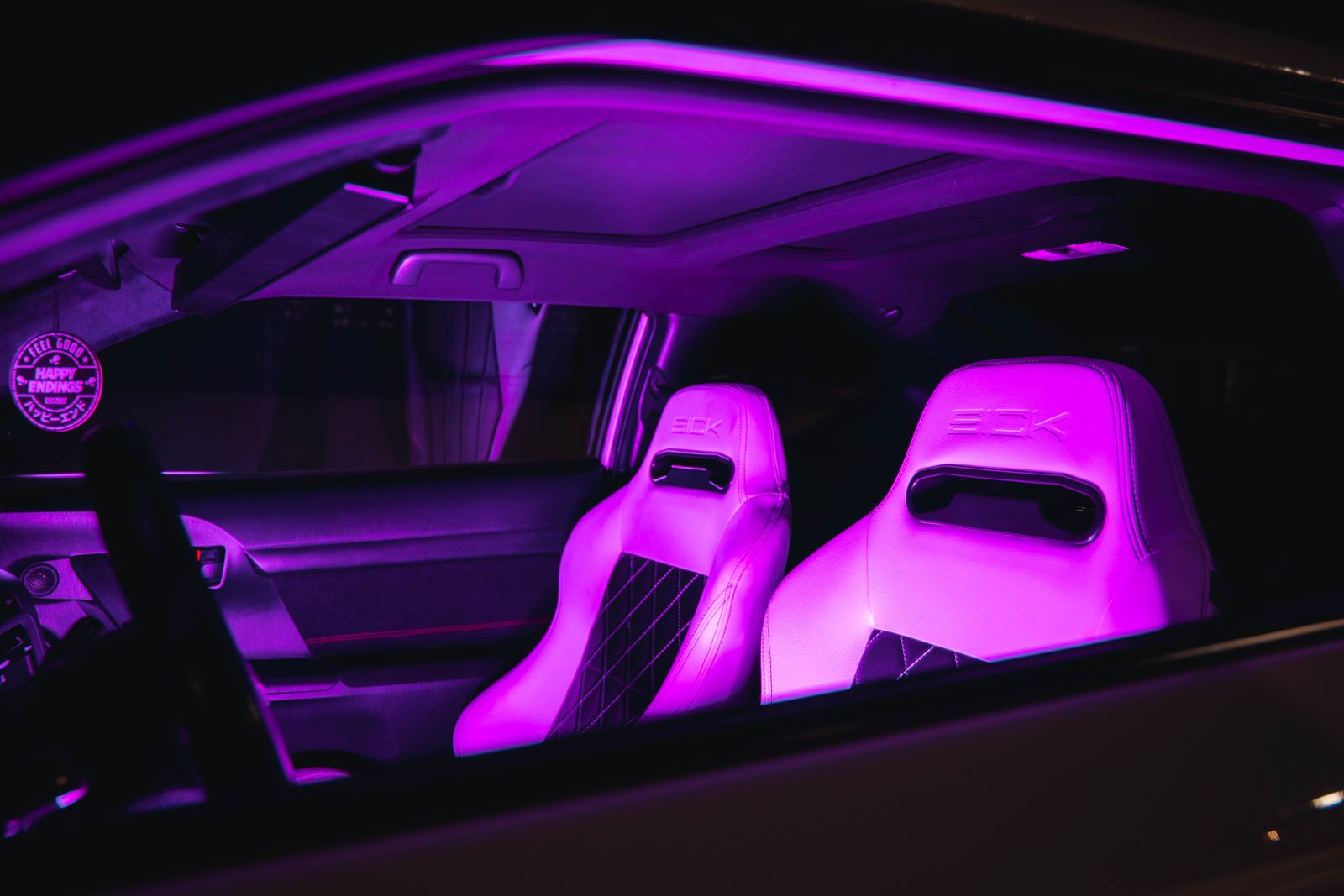
A long drive is hard on the body. You sit in one position for hours, with your feet working the pedals and your hands on the wheel, and a seat that suits a short trip to the shops can leave you stiff and aching by the end of a motorway run. Cushions and supports can help, but only once the seat itself is set up properly. This guide starts there, then goes through each kind of cushion and support: memory foam, gel and cooling seat cushions, lumbar supports, neck pillows, wedges for shorter drivers, and heated and massage cushions. It finishes with the thing no cushion replaces, which is a proper break.
A note before you start: the advice here is general. If you have a back or neck condition, or pain that does not go away, ask your GP or a physiotherapist what will help you.
Setting up the seat first
The Highway Code asks you to make sure, before you set off, that your mirrors and seat are adjusted correctly to give comfort, full control and maximum vision, and that head restraints are properly adjusted to reduce the risk of neck and spine injuries in a collision. A cushion added to a badly set seat will not fix it, and it can make it worse. So set the seat up first, then decide whether you need anything more.
A simple order to follow
- Height. Raise or lower the seat until you can see clearly over the steering wheel and the dashboard, with a little space between your head and the roof.
- Distance. Slide the seat forward or back until you can press the clutch, or the brake in an automatic, all the way down with your knee still slightly bent.
- Backrest. Bring the backrest fairly upright so your shoulders stay against it when you hold the wheel. With your shoulders against the seat, your wrists should rest on the top of the wheel with your arms nearly straight; when you hold the wheel, your elbows bend comfortably.
- Steering wheel. If the wheel adjusts for height and reach, set it so you can see the instruments through it and hold it without stretching.
- Head restraint. RoSPA's advice is that the top of the head restraint should be level with the top of your head, and as close as possible to the back of your head.
- Mirrors. Set all three mirrors last, from the position you will actually drive in.
The seat belt and the airbag
RoSPA's car safety advice is that a seat belt should be worn tight without slack, across the pelvis rather than the stomach, across the centre of the shoulder, and never twisted. Under airbags, it advises drivers to sit as far back as practical. Both matter when you add a cushion, because anything you sit on changes where you sit, and so changes where the belt crosses your body and how close you are to the wheel. After adding any cushion, check the belt again and check that you are not sitting closer to the steering wheel than you need to be.
Covers and cushions
If your seats have covers, put the cushion on top of the cover rather than under it, and make sure neither slides. The seat covers guide explains why covers must be made to be compatible with side airbags in the seats, and the same care applies to anything that wraps around the seat back.
Seat cushions: memory foam, gel and cooling
A seat cushion sits on the seat base, under you. It changes how the seat feels: softer, firmer, more even, cooler or warmer. Most are one of three kinds.
Memory foam
Memory foam softens with body heat and slowly moulds to your shape, spreading your weight over a wider area rather than letting it rest on a few points. Many drivers find that helps on a seat that feels hard or that has worn into an uncomfortable shape. Memory foam cushions are often shaped, with a raised front edge under the thighs, a dip for the hips, and a cut-out at the back under the tailbone. They do raise you up a little, so check your seat height, your view and your head room afterwards. You can find other memory foam items in memory foam car accessories.
Gel
Gel cushions use a layer of gel, often in a honeycomb pattern, sometimes on top of foam. The gel moves under you and does not hold heat in the way that foam can, so a gel cushion often feels cooler, especially at the start of a journey. Honeycomb gel cushions are usually thinner than memory foam ones, so they change your seating position less.
Cooling and breathable cushions
Some cushions are made to keep you cooler: mesh covers that let air move, beaded or bamboo-style mats, and cushions with a small fan inside that blows air through the surface, powered from the 12V socket or a USB socket. These suit hot summers, leather or PU leather seats that get sticky, and people who drive for hours in a van. For a cooler car generally, the guide to keeping a car cool in summer covers shades and 12V fans as well.
What to check before you buy
- Thickness. A thick cushion raises you, which changes your view, your reach to the pedals, where the seat belt sits and your distance from the airbag. Check all of these after fitting it.
- Non-slip base. A cushion must stay put. A rubberised or grippy base, or a strap that goes round the seat back, stops it sliding forward when you brake.
- Removable cover. Cushions get warm and grubby. A zipped cover that comes off for washing keeps it fresh.
- Size. Measure the seat base between the side bolsters. A cushion that is wider than that will sit up on the bolsters and tip you.
Browse the car seat cushions with these in mind.
Lumbar supports
The lumbar area is the lower part of your back, just above the hips, which curves gently inwards. Many car seats either have no support there or have support in the wrong place for you, so your lower back sinks into the seat and your posture slumps over a long drive.
How a lumbar support works
A lumbar support is a shaped cushion that sits between your lower back and the seat back, filling the gap and supporting the natural curve. Most are memory foam, curved to follow the spine, with a strap that goes round the seat back to stop it slipping down. Some are mesh frames that hold the back slightly away from the seat, which also lets air move behind you.
Getting the height right
A lumbar support only helps if it is in the right place. Sit back fully in the seat, then slide the support up or down until it sits in the small of your back rather than in the middle of the back or down at the hips. Adjust the strap so it stays there. If the support pushes you forward away from the seat back, it is too thick for you, or the backrest needs to come a little further back.
Seats that already have it
Many cars have an adjustable lumbar support built into the seat, worked by a lever, a knob or a button on the side. Check your handbook before buying one, and try the car's own adjustment first. If it does not go far enough, or sits at the wrong height, an added support can help.
Things to watch
A lumbar support takes up space between you and the seat back, so it moves you slightly forward. Check your reach to the pedals and wheel, and that your head is still close to the head restraint. The lumbar supports range includes both foam and mesh designs.
Neck and headrest pillows
Neck pillows for the car are not the same as the U-shaped travel pillows used on planes. Most fix to the head restraint with a strap and sit under the neck or at the back of the head.
What the head restraint is for
The head restraint is a safety part, not just a comfort part. The Highway Code asks you to keep it properly adjusted to reduce the risk of neck and spine injuries in a collision, and RoSPA's advice is that its top should be level with the top of your head and that it should sit as close as possible to the back of your head. That gap matters: the further your head is from the restraint, the further it can move back in a rear impact.
Choosing a pillow that works with it
That makes the choice of a neck pillow for the driver's seat important. A good one sits between your neck and the restraint and fills the gap, so your head rests back, supported, with the restraint still in the right place. A pillow that is too thick and pushes your head forward, or one that means you have to drop the restraint down to fit it, defeats the point. Fit the pillow, set the restraint to the right height, and sit back. Your head should rest against it naturally, without being tipped forward.
Passengers
Passengers on long journeys are where neck pillows earn their keep. A passenger who sleeps in the car can rest their head without it lolling to the side. Many headrest pillows have wings at the sides for this, and some clip on and off quickly so they can move between seats. See the neck and headrest pillows.
Seat belt pads
If the seat belt rubs your neck or shoulder, a seat belt pad wraps around the belt and softens it. Choose a slim one that slides freely along the belt, and keep the belt itself in the right place, across the centre of the shoulder and never twisted. A pad should never be used to pull the belt away from where it is meant to sit.
Wedge cushions for shorter drivers
Shorter drivers often find that even with the seat raised as far as it goes, the view over the wheel and the bonnet is not what it should be, or that bringing the seat forward to reach the pedals leaves them sitting very close to the wheel.
What a wedge does
A wedge cushion is thicker at the back than at the front. It lifts the hips and tilts the pelvis slightly forward, raising your eye line and often making it easier to sit upright. Because it is thinner at the front, it lifts you without pushing your thighs up into the steering wheel.
Checking it is safe
- The view. Your eye line should be well above the top of the steering wheel, with a clear view over the dashboard and bonnet.
- The pedals. You must still be able to press each pedal fully, and move your foot quickly from accelerator to brake, without sliding off the cushion.
- The seat belt. Being higher changes where the belt crosses you. Check it still runs across the pelvis and the centre of the shoulder, as RoSPA advises, and not across your stomach or neck.
- The airbag. RoSPA advises drivers to sit as far back as practical. A wedge should let you see properly without bringing you closer to the wheel. If anything, a better view should let you move the seat back a little.
- The head restraint. Sitting higher means the restraint needs to come up too, so its top is level with the top of your head.
- It must not move. A wedge that slides forward under braking is dangerous. Choose one with a non-slip base.
The wedge cushions for shorter drivers range has firm foam and memory foam wedges.
Heated and massage cushions
Heated and massage cushions plug in, usually into the 12V socket, and add warmth or movement to the seat.
Heated cushions and seat covers
A heated cushion or heated seat cover has a heating element inside and a controller on the cable, usually with high and low settings and often a timer or automatic switch-off. They make cold mornings much more bearable in a car without heated seats, and they warm up far more quickly than the car's heater warms the cabin. Route the cable so it cannot tangle around the pedals, the handbrake or the gear lever, and with a cover that wraps the seat back, check it is made to work with any side airbag in the seat, just as with ordinary seat covers. Turn it off, or unplug it, when you leave the car, because in some cars the 12V socket stays live with the engine off and can run the battery down. The winter car kit guide covers heated covers and blankets alongside the rest of the cold weather kit.
Massage cushions
A massage seat cushion has motors that vibrate or knead, often in zones you can choose from the controller, sometimes with heat as well. They are popular with long-distance drivers and passengers. If you use one in the driver's seat, set it before you set off rather than fiddling with the controller on the move, and turn it off if it distracts you or makes you feel drowsy. A massage cushion is often thick, so check your seating position, view and seat belt with it fitted, just as with any other cushion.
Power
Both kinds need the 12V socket or a USB socket. If the 12V socket is already used for a phone charger or a dash cam, a 12V socket splitter gives you more. Check the cushion's power needs against the socket, and do not run several heated items from one socket at once unless the splitter is made for it.
Breaks on long drives
No cushion makes a long drive without stopping comfortable or safe. Stiffness, aches and tiredness all build up the longer you sit, and the answer is to stop and move.
What the Highway Code says
Rule 91 of the Highway Code says that driving when you are tired greatly increases your risk of a collision. It asks you not to begin a journey if you are tired, to get enough sleep before a long journey, and to avoid long journeys between midnight and 6am, when natural alertness is at its lowest. It recommends a break of at least 15 minutes after every two hours of driving. If you feel sleepy, it says to stop in a safe place, and not in an emergency area or on the hard shoulder of a motorway. Rule 237 adds that in hot weather you should keep the vehicle well ventilated to avoid drowsiness.
Making the most of a stop
- Get out of the car and walk, even for a few minutes. Standing and moving loosens the hips, back and shoulders after sitting.
- Have a drink and something to eat. A 12V cool box keeps water and food cold on a long trip.
- Before you set off again, check the seat, the cushion and the mirrors. Seats and cushions settle over a few hours.
Plan the breaks in
The Highway Code asks you to plan your route and allow enough time for breaks and possible delays. On a long drive, look at the route before you leave and pick the services or safe stopping places where you will break, roughly every two hours. Commuters with a long daily drive can find more ideas for comfort in accessories for commuters.
Questions
Will a seat cushion make me sit too high?
It can. Thicker cushions, and memory foam in particular, raise you up. After fitting one, check your view, head room, reach to the pedals and wheel, where the seat belt crosses you, and the head restraint height. If you have to lower the seat a long way to make up for it, a thinner gel cushion may suit better.
Where should a lumbar support go?
In the small of your back, just above the hips, where the spine curves inwards. Sit back fully in the seat, then slide the support up or down until it fills that curve, and tighten the strap so it stays there.
Can I use a neck pillow on the driver's seat?
Yes, if it works with the head restraint rather than against it. RoSPA advises having the top of the restraint level with the top of your head and as close as possible to the back of your head. A pillow should fill the gap without pushing your head forward or making you lower the restraint.
Is a heated seat cover safe on a seat with side airbags?
Only if it is made to be compatible with side airbags. Covers that wrap around the seat back can get in the way of an airbag in the side of the seat, so check the product description and your car's handbook. A cushion that sits only on the seat base does not cover the seat back.
How often should I stop on a long drive?
The Highway Code recommends a break of at least 15 minutes after every two hours of driving, and stopping in a safe place, not on the hard shoulder, if you feel sleepy.
Where to go next
Start with the car seat cushions and lumbar supports, or look at everything in seats and comfort. Delivery is included in every price and tracked to your door. Other guides that help:
- Choosing car seat covers: covers, materials and side airbags
- Choosing a steering wheel cover: a better grip on long drives
- Winter car kit: heated seat covers and blankets
- Keeping a car cool in summer: cooling cushions and fans