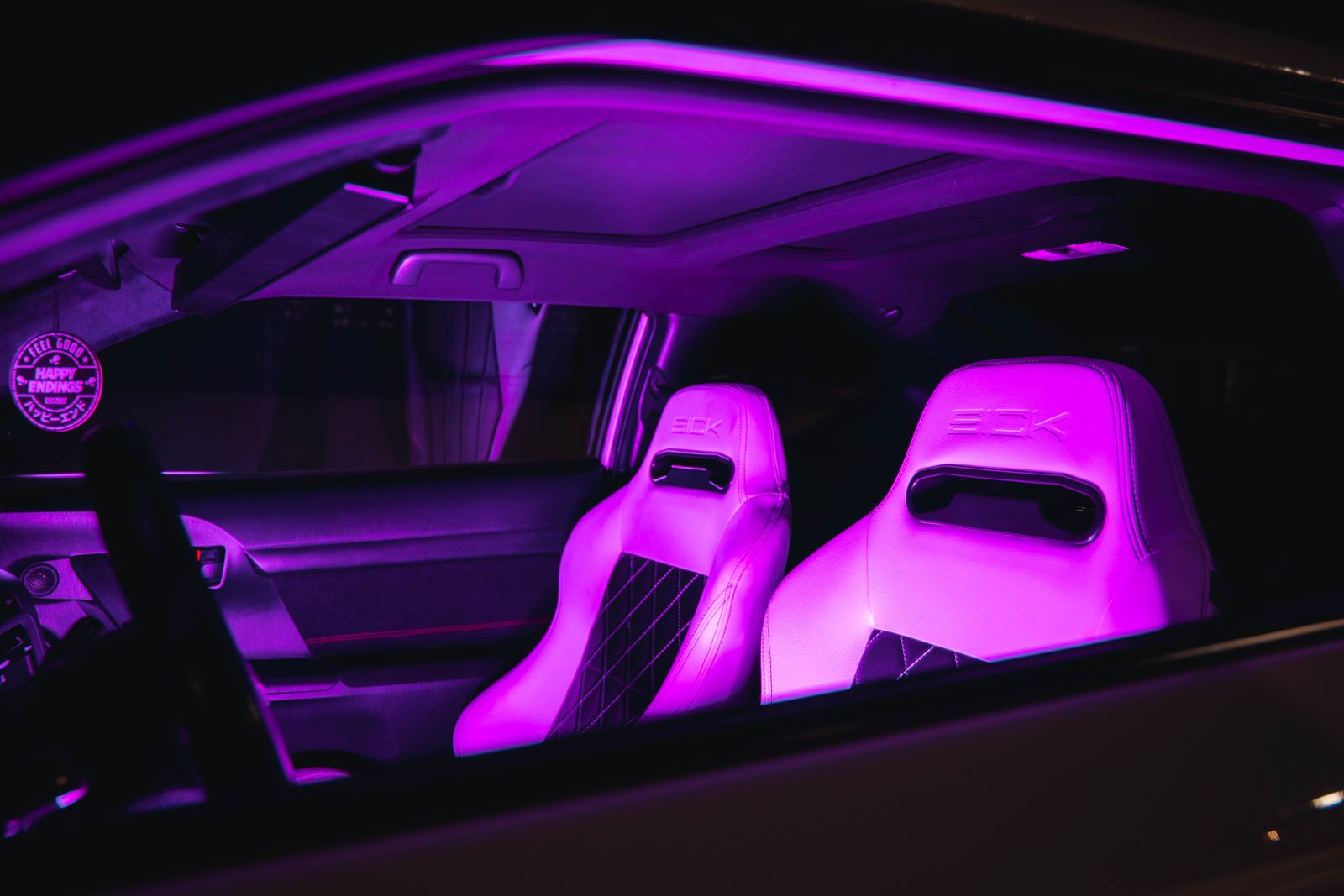
A car fills up slowly. A receipt in the door pocket, a bottle in the footwell, a coat on the back seat, a bag of things that were meant to go back to the shop. Before long the phone is down the side of the seat, there is nowhere to put a drink, and something rolls about every time you brake. Organising a car is not about buying a box for everything. It is about deciding what really needs to live in the car, giving each of those things a place, and making sure the things you need while driving are within reach before you set off. This guide goes through the car from the front seats to the boot, with the kinds of organiser that help in each place.
Start with what lives in the car
Before you buy anything, empty the car. Take everything out of the door pockets, the glovebox, the console, the seat pockets, the footwells and the boot, and put it in one pile. Most people find a surprising amount of rubbish, several things they thought they had lost, and a lot that has no reason to be in the car at all. Then sort what is left into four groups.
| Group | Examples | Where it goes |
|---|---|---|
| Things you use while driving | Phone, sunglasses, a drink, parking card, charging cable | Within reach of the driver: the console, cup holders, visor and door pocket |
| Things you use when you stop | Tissues, wipes, pens, the car's paperwork, a shopping bag | The glovebox, the door pockets and the back of the front seats |
| Things for emergencies | Hi-vis vest, torch, first aid kit, warning triangle | Part within reach, part in the boot |
| Things that should not be there | Rubbish, things belonging in the house, loose heavy tools | Out of the car |
Why the driver's things come first
The Highway Code lists the things that take a driver's attention off the road, and several are about the inside of the car: trying to read maps, starting or adjusting music or the radio, and eating and drinking. Reaching across the car for a phone that has slid off the seat, or feeling about the footwell for a bottle, belongs on the same list. The Code also asks you to plan the journey and adjust your seat and mirrors before you set off. So the aim for the driver's area is that everything you might want on the move is already in a fixed place you can reach without looking, and anything that needs more than a glance is dealt with before you set off or after you stop.
Why loose things matter
The Highway Code asks you to make sure any heavy or sharp objects in the car are secured, because if there is a collision they might hit someone inside the vehicle. Its annex on vehicle maintenance makes the same point about luggage, which should be securely stowed. A bottle or a can that rolls forward can also end up under the driver's pedals, which is the last place you want anything. Most of the organisers in this guide exist to give loose things somewhere to sit still.
Keeping valuables out of sight
The same annex has advice on security: when you leave the car, take the contents with you or lock them in the boot. An organised car makes this easier, because the bag, the laptop and the phone have places to go that are not the passenger seat.
Keeping it that way
The clear-out is the easy part. Keeping the car tidy comes down to two habits. First, everything that comes into the car on a trip goes out at the end of it: the coffee cup, the post, the bag from the shop. Second, the things that live in the car always go back in the same place, so you can find them without looking. Giving each thing a place is what the organisers below are for, and once each thing has one, the habits are much easier to keep.
Seat gap fillers and side pockets
The gap between the front seats and the centre console swallows phones, keys, coins, pens and chips. A phone that drops into it while you are driving is a real problem, because the urge to reach down for it is strong and the gap is usually too narrow for your hand.
Seat gap fillers
A seat gap filler is a soft, long cushion that pushes into the gap between the seat and the console and closes it. Most are made of foam covered in fabric or a leather look, and some have a slot through the middle for the seat belt buckle. They are quick to fit and suit most cars, because the foam squashes to fit the gap. Before you settle on one, check three things in your own car:
- the seat still slides forwards and backwards and tilts without catching on the filler;
- the seat belt buckle is still easy to reach and the belt fastens and releases freely;
- nothing is pressed against a seat control on the side of the seat.
Seat side pockets
A seat side pocket does the same job as a filler but adds storage: a slim organiser that sits in the gap with pockets for the phone, cards, sunglasses or a small bottle. It turns wasted space into a place within reach of the driver. Choose one slim enough not to rub against the handbrake or the gear lever, and keep it to light things. The seat gap fillers and seat side pockets are the two kinds.
Airbags
Some cars have airbags built into the seats themselves. The car's handbook shows where each airbag is. Keep any organiser, and anything in it, clear of where an airbag would open.
Console, armrest and visor organisers
The centre console and the sun visor are the places the driver can reach most easily, so they are where the driving things should go.
Console organisers
Many consoles have an open tray or bin that is just a hole where things pile up. A console organiser is an insert that drops into that space and divides it, usually with a tray on top for coins, keys or a parking card and a deeper space underneath for bigger things. Measure the console's opening before you choose, because these inserts only work if they fit well. A loose insert slides about and is no better than the bare bin.
Armrest boxes and cushions
If the car has no armrest between the front seats, or only a narrow one, an armrest box sits on the console and gives you a padded rest with storage inside. If the car has an armrest that is hard or low, a cushion on top makes it more comfortable on a long drive. Check that a box does not get in the way of the handbrake, the gear lever or the seat belt buckles, and that it is held down firmly. The console organisers and armrest boxes cover both.
Visor organisers
A visor organiser straps around the sun visor and has slots and pockets for a parking card, fuel card, pens, receipts and sunglasses. It keeps them flat and out of the way until you fold the visor down. Choose one that is slim enough for the visor to fold right back against the roof and still sit against its clip, and keep it light. If the visor is heavy it will drop down on its own over bumps. Keep the visor's own mirror clear if you use it, and do not let anything hang down from it into your view of the road. See the sun visor organisers.
The phone
The phone is the one thing most drivers reach for, so it needs the firmest place of all. If it is your sat nav, it belongs in a holder, set up before you set off, where you can see it with a glance and it hides nothing you need to see. Choosing a car phone holder goes through the kinds and what the law says. If it is not, a pocket in the console or a seat side pocket keeps it still and out of your hand until you stop.
Door pockets and the glovebox
Door pockets are deep and narrow, so small things sink to the bottom. A door pocket organiser divides the pocket so the umbrella, the hi-vis vest and the ice scraper each have a slot. The glovebox is the right place for the car's handbook, its paperwork, a torch, a small first aid kit and things you need when you stop, not things you need while driving, because it is out of the driver's reach.
Cup holders and expanders
Most cars have cup holders, and many are too small or too shallow for the bottles and cups people actually carry. A large bottle wedged into a footwell, or a coffee held between the knees, is the result.
Cup holder expanders
A cup holder expander has a narrow base that fits into the car's own cup holder and a wider top that holds a bigger bottle, flask or cup. Many have an adjustable base, so you can tighten it to the size of your holder and stop it wobbling. Check that the taller drink will not knock against the dashboard, the gear lever or your elbow when it is in place, and that it will not block the heater controls or the car's screen.
Cup holder organisers
Some inserts go into a cup holder you do not use for drinks and turn it into a place for a phone, keys or coins. Others clip to a vent or hang from a door to add a holder where the car has none. The cup holder expanders and organisers range has both kinds.
Keeping them clean
Cup holders collect drips, crumbs and coins. Many expanders and inserts lift out, so they can be washed at the sink, and a soft rubber or silicone liner in the bottom of a holder catches spills before they set. A small detailing brush or cleaning gel gets into the corners that a cloth cannot reach.
Drinking while driving
The Highway Code lists eating and drinking among the things that can distract a driver. A secure holder means a drink is not going to tip over or need catching, but it is still better to drink when the car is stopped, especially anything hot. Use a cup with a lid, and keep hot drinks away from children in the back.
Headrest hooks and coat hangers
The backs of the front seats are useful space that most cars waste.
Headrest hooks
A headrest hook clips onto the metal posts of a front headrest and gives you a hook on the back of the seat for a handbag, a shopping bag or a takeaway. It keeps bags off the floor and stops them tipping over on the back seat. They fit most cars with separate headrests. Use them for light bags only. A heavy bag swinging on a hook is the kind of loose object the Highway Code asks you to secure, and it can bang against the knees of whoever is sitting behind. Heavy shopping belongs in the boot. Browse the headrest hooks.
Car coat hangers
A car coat hanger fixes to the headrest posts and holds a jacket or shirt in shape on the back of the seat, so it arrives without creases. It suits anyone who drives to work in a suit or to an interview, a wedding or a meeting. Check that the coat does not hang over the side window where you need to see out, and that it does not block your view in the mirrors. The Highway Code asks you to set the mirrors for maximum vision before setting off, and a coat in the way undoes that. See the car coat hangers.
Back seat organisers
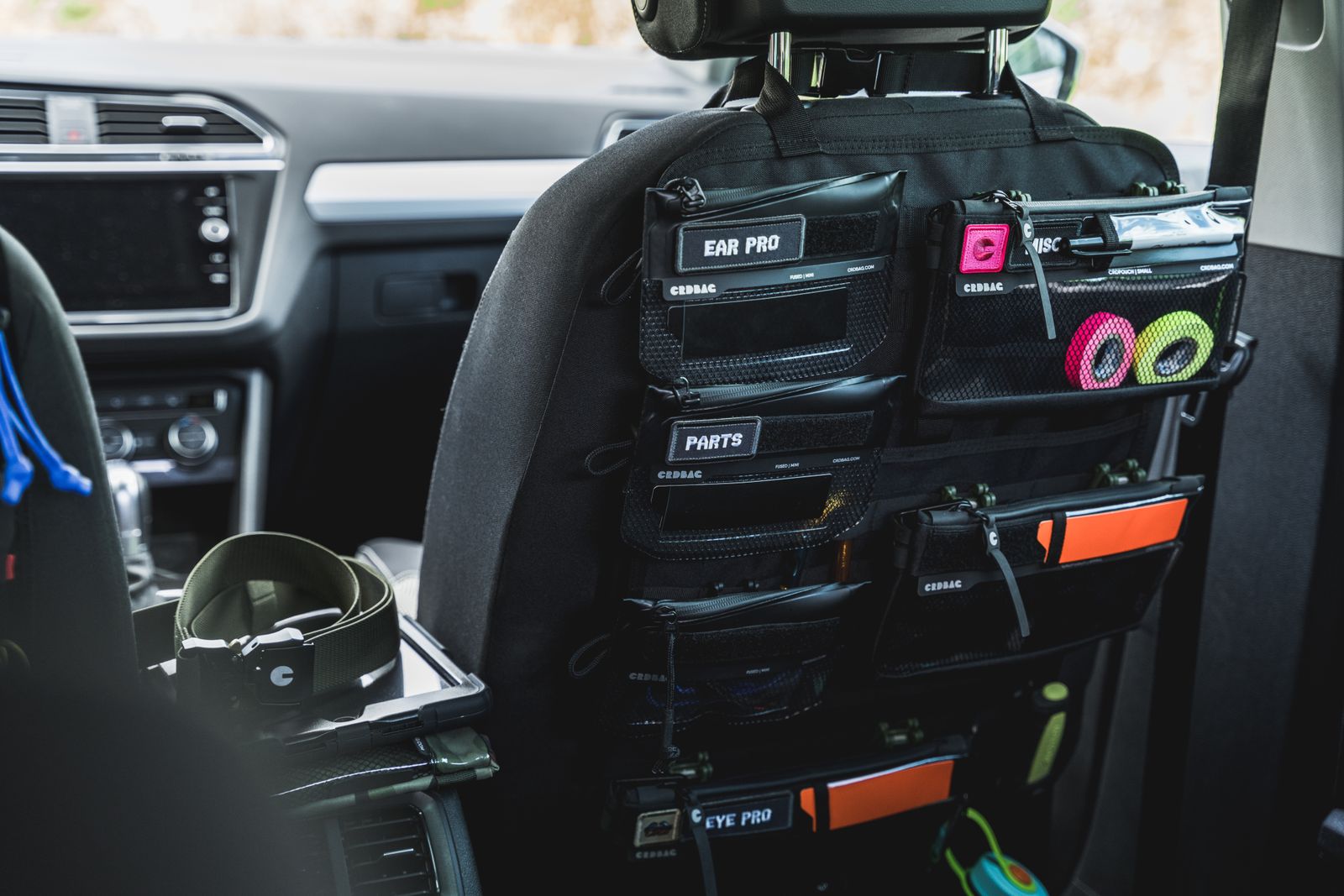
A back seat organiser hangs on the back of a front seat with a strap round the headrest and another round the seat. It has pockets for drinks, tablets, books, wipes and toys, and the lower part protects the seat back from feet. It suits anyone with children in the back. See the back seat organisers and kick mats, and the guide to travelling with children in the car.
A car bin
Without a bin, rubbish gathers in the door pockets and footwells, gets trodden in, and makes the car smell. The Highway Code is clear about the alternative: you must not throw anything out of a vehicle, because it can endanger other road users, particularly motorcyclists and cyclists. A car bin gives wrappers, receipts, tissues and cans a place until you can empty it.
Kinds of car bin
- Hanging bins strap to the back of a front seat or the headrest, where passengers in the back can reach them.
- Footwell and console bins stand on the floor or sit beside the console, within reach of the driver and front passenger.
- Cup holder and door bins are small bins shaped to sit in a cup holder or a door pocket, good for receipts and wrappers.
What to look for
A waterproof lining stops a leaking drink soaking into the carpet. A lid, or a top that closes, keeps smells in and stops rubbish spilling under braking. A bin that takes ordinary small bin bags is easiest to empty. Make a habit of emptying it every time you fill up with fuel or charge. The car bins range covers each kind, and car tissue boxes for the visor, console or headrest keep tissues in one place too. If the car already smells, empty and wash the bin first, because that is often where the smell comes from.
Tissues and wipes
Tissues and wipes are the other things a car always seems to need and can never find. A tissue box holder straps to the visor, sits in the console or hangs from a headrest, and keeps a box or a pack where both the driver and passengers can reach it. Keep a pack of wipes in the door pocket too, for sticky hands and spills.
The boot
The boot is where most of the car's clutter ends up, and where loose things do the most rolling about.
Boot organisers
A boot organiser is a box, usually made of stiff fabric with dividers, that sits on the boot floor and gives the things you always carry a place of their own: the emergency kit, a first aid kit, cleaning things, a blanket, shopping bags. Most fold flat when you need the whole boot. Some have straps or a grippy base to stop them sliding, which is worth having. Measure the boot floor before you choose, and leave room for the shopping. See the boot organisers.
Cargo nets
A cargo net stretches across the boot floor or the side of the boot and holds loose things flat, so the shopping, a ball or a pair of boots cannot roll about. Some fix to the boot's own tie-down rings or hooks; others are envelope nets that hang on the boot sides as a pocket. Look at the cargo nets, and use proper straps for anything heavy.
A boot liner underneath
A liner protects the boot floor from spills, mud and wet bags, and makes the boot easy to clear out and wipe down. A liner with a raised edge keeps spills in. The boot and cargo liners come in rubber and fabric, and choosing car floor mats explains the difference.
Packing the boot
Put heavy things at the bottom and as far forward as they will go, against the back of the rear seats, and light things on top. Keep the emergency kit where you can get it out without unloading everything else. If something cannot be held by a net or an organiser, wedge it so it cannot move. If a dog travels in the boot, plan the space around the dog first.
Questions
Can I hang things from the rear-view mirror?
Be careful with anything big. The MOT inspection manual lets the tester remove items such as air fresheners that obstruct the driver's view of the road, and an obstruction that significantly affects the view through the area the wipers clear is a major defect. Keep anything there small and out of your line of sight.
Are seat gap fillers safe?
They are simple foam cushions, but check that the seat still adjusts freely, the seat belt buckle is easy to use, and nothing sits where a seat airbag would open. The handbook shows where the airbags are.
What should live in the glovebox?
The handbook, the car's paperwork, a torch, a pen, tissues and a small first aid kit. Not the phone or anything you need while driving, because the driver cannot safely reach it.
How do I stop the shopping rolling about in the boot?
Use a boot organiser for bags and a cargo net for loose items, and put heavy things against the back of the rear seats.
How often should I clear the car out?
Empty the bin and take out anything that came in on the trip every time you fill up or charge, and do a proper clear-out of every pocket and the boot every few months. It takes minutes when it is done often.
Is it illegal to throw rubbish out of the car?
Yes. The Highway Code says you must not throw anything out of a vehicle. A car bin gives the rubbish somewhere to go until you stop.
Where to go next
All of the organisers in this guide are in the storage and organisers department, and the boot things are with the mats and liners. Delivery is included in every price and tracked to your door. Other guides that help:
- What to keep in your car for emergencies: the kit that should have a place of its own
- Choosing a car phone holder: a fixed place for the phone
- Organising a van cab: the same job in a van